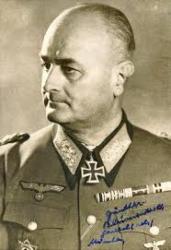
Franz Phillipp von Lamberg
 Austria
Franz Philipp von Lamberg was an Austrian general and political writer whose career ended amid the upheaval of the Hungarian Revolution of 1848. Born into a family of Hungarian landowners, he served the Habsburg army for nearly four decades and was ultimately sent to Hungary in an attempt to assert royal authority during a rapidly escalating crisis.
Early life and military career
Lamberg was born on 30 November 1791 in Mór, in the Kingdom of Hungary. He entered the Austrian army as a lieutenant in 1810 and served in campaigns in Italy in 1813 and 1814 during the Napoleonic Wars. Over the following decades he advanced through the cavalry, commanding units and taking posts in Eszék and Pressburg, now Osijek and Bratislava.
He became a general major in 1834 and a field marshal lieutenant in 1843. From 1844 he served as a division commander in Pressburg. His background as a Hungarian magnate and his familiarity with the country’s political landscape made him a possible intermediary as tensions mounted between the Hungarian government and the Habsburg court.
Writing and political views
Alongside his military career, Lamberg took an interest in political debate. He was associated with the moderate Hungarian journal “Hírnök” and wrote a pamphlet in 1841 titled “Még egy terra incognita,” or “Another Unknown Land,” which responded to a work by the journal’s editor and discussed the wider Habsburg lands. His writing and public activity brought him into the orbit of Hungarian political figures, including Lajos Batthyány.
The 1848 crisis in Hungary
In September 1848, after the Hungarian Palatine Archduke Stephen failed to arrange talks with Josip Jelačić, the Ban of Croatia, he departed for Vienna. The imperial court then appointed Lamberg commander-in-chief of all imperial forces in Hungary and, provisionally, Palatine. The move was meant to signal a conciliatory alternative to giving Jelačić both civil and military authority, but the appointment initially lacked the countersignature of Hungarian Prime Minister Batthyány. Its publication was therefore rejected by political opponents in the Hungarian Diet, which also ordered that Lamberg should not assume command.
Lamberg travelled to Pest on 28 September to seek recognition of his appointment. Amid a deeply volatile atmosphere, he was pulled from his carriage on the bridge between Buda and Pest and killed by a crowd before he could take up his command. His murder became a decisive rupture in efforts to avert open conflict; two days later, Hungarian and Croatian forces fought at Pákozd.
Legacy
Lamberg’s death has been remembered as one of the most dramatic episodes of the 1848 revolution. His life combined aristocratic military service, political writing, and a final mission whose legitimacy was disputed by the very parliament he was meant to serve. He died in Pest, now part of Budapest, at age 56.