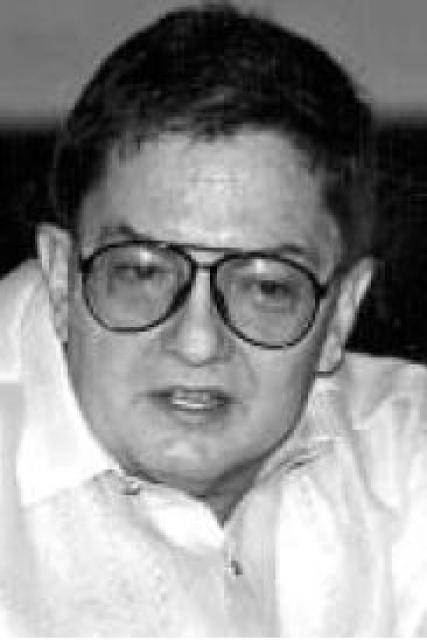
Fred Elizalde
 Spain
- A Young Musician Across Continents
- Jazz in Cambridge and London
- Composition and Conducting
- A Career Beyond One Genre
Fred Elizalde moved easily between musical worlds. A pianist and composer born in Manila to Spanish parents, he became a striking young presence in British jazz and dance music before devoting himself to classical composition and conducting. His path ran from conservatory study in Madrid and university life in California to the Savoy Hotel in London and, later, concert work in Spain and the Philippines.
A Young Musician Across Continents
Born Federico Elizalde on December 12, 1907, he showed musical promise early. At seven, he entered Madrid’s Royal Conservatory, where he studied piano and won first prize in pianoforte performance as a teenager. He later attended school in England and went to Stanford University in California to study law. There, however, his musical ambitions took the lead: he studied composition with Ernest Bloch and left Stanford in 1926 to pursue music.
Elizalde had already become fascinated by jazz and dance music. While at Stanford, he led a student band and played in Los Angeles, developing a style that drew on the new, energetic sounds arriving from American jazz.
Jazz in Cambridge and London
In 1926, Elizalde moved to England and enrolled at Cambridge. He soon took charge of a student dance band, the Quinquaginta Ramblers, bringing together young players and shaping a sound that stood apart from the more polished dance orchestras popular at the time. He favored lively arrangements, space for improvisation and a stronger jazz pulse.
His success led to a residency at London’s Savoy Hotel with a larger ensemble, Fred Elizalde and His Music. The band also broadcast on the BBC and recorded, helping expose British listeners to a more forceful style of jazz. Its popularity brought attention as well as resistance: some hotel patrons disliked the music, and the BBC eventually ended the group’s broadcasts. Elizalde left the British scene around 1930 to return to classical study and composition.
Composition and Conducting
Elizalde continued his musical education in Spain and Paris, where he worked with or learned from prominent composers including Manuel de Falla, Maurice Ravel and Darius Milhaud. He composed orchestral and chamber works, songs and music for stage productions. His creative life was not confined to the concert hall: he remained interested in jazz and in ways modern composition could absorb its rhythms and color.
In the 1930s, he conducted and presented contemporary works in Spain and France. After the Second World War, he returned to Manila and resumed conducting, including work with the Manila Symphony Orchestra. He also conducted abroad, notably leading the London Symphony Orchestra in 1951.
A Career Beyond One Genre
Elizalde’s reputation rests on an unusual double achievement. His Savoy band helped bring a more adventurous American-influenced jazz sound to British dance audiences, while his later work established him as a composer and conductor with serious classical ambitions. He died in Manila on January 16, 1979, leaving a career that connected the musical scenes of the Philippines, Britain, Spain, France and the United States.


