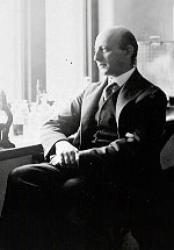
Frederick Griffith
 Great Britain
Biography of Frederick Griffith
Frederick Griffith was an English geneticist and physician who specialized in microbiology, particularly in the epidemiology and pathology of bacterial infectious diseases. He was born in Hale, Cheshire, England, and the exact year of his birth is unknown. Griffith received his higher education at the University of Liverpool, where he focused on genetics. He subsequently worked at the Liverpool Royal Infirmary, Joseph Tie's laboratory, and the Royal Commission on Tuberculosis.
In 1910, Griffith began collaborating closely with the government. During World War I, the laboratory where he worked was transferred to the Ministry of Health and transformed into the Pathological Laboratory. Griffith studied various strains of pneumococcus collected from patients nationwide. Despite limited funding, he and his colleague William M. Scott were able to achieve significant results with minimal resources.
By the beginning of World War II, the laboratory had expanded substantially and had become a national service. Griffith’s most significant contribution is considered to be his experiment conducted in the 1920s at the Pathological Laboratory. To better understand the characteristics of pneumococcus and its impact on living organisms, Griffith classified all the samples collected for him and conducted experiments on mice. He was able to identify two types of bacteria: Type S, which formed smooth colonies in laboratory dishes and had a special polysaccharide capsule that protected the bacteria from the host's immune system, causing pneumonia that killed mice within a day or two. On the other hand, Type R, which formed rough colonies and lacked a capsule, was easily destroyed by the body's defense mechanisms.
Griffith discovered that when he introduced heat-killed Type S bacteria and live Type R bacteria into a mouse's bloodstream, the mouse died. Further research showed that the Type R bacteria somehow acquired capsules from the remains of the Type S bacteria. Based on this experiment, Griffith hypothesized the existence of a "transforming factor" that allowed the transfer of traits between bacterial strains. Subsequent studies confirmed this conclusion. However, Griffith was unable to fully understand the nature of this "factor."
The full utilization of Frederick Griffith's discovery only occurred in 1944, three years after his death. American scientist Oswald Avery demonstrated that the classical theory, which stated that genetic information was contained in proteins, was incorrect. Avery showed that the genetic code was encoded in DNA. It was the transfer of chemical components of DNA that allowed the pneumococcus strain to acquire previously uncharacteristic traits.
Griffith continued to study bacteria until his death, which occurred during a bombing raid in London. The exact date of his death is unknown, with some sources suggesting April 17, 1941, and others indicating one of the bombings in February 1941. The latter version is considered more likely, and it is believed that Griffith and Scott died during one of the fascist air raids on London.