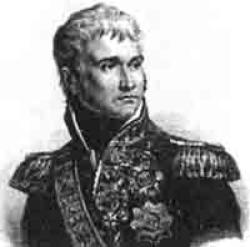
Frederick Lambart
 Great Britain
Early Life and Education
Edmund Henry Hynman Dalrymple-Lambert was a British military commander born into a distinguished aristocratic family. His ancestors were granted the title of Earl of Cavan in 1647. Lambert attended the prestigious Eton College and the Royal Military Academy Sandhurst.
Military Career
Pre-World War ILambert began his military career in 1885 with the Grenadier Guards in London and Dublin. In 1891, he became an aide-de-camp to the Governor-General of Canada, returning to his regiment in 1893. He served in the Second Boer War. In 1900, he inherited the earldom, becoming the 10th Earl of Cavan. From 1904, he commanded a battalion in the Grenadier Guards.
World War I
With the outbreak of World War I, Lambert returned to service. He commanded the 2nd London Territorials and was promoted to brigadier general. He fought in France as part of the British Expeditionary Force. In October 1914, he took over the 4th Guards Infantry Brigade after its commander was wounded. From June 1915, he commanded the 50th (Northumbrian) Infantry Division, and from August, the Guards Division.
From January 1916, Lambert commanded the 14th Army Corps on the Western Front. In October-November 1917, he led the corps to Italy to support the Italian army. In March 1918, he became commander of the British troops in Italy. In October, he commanded the 10th Italian Army, which included a significant British contingent. He participated in the Battle of Vittorio Veneto.
Post-World War I
After the war, Lambert remained in Italy until 1919. From 1920, he commanded the Aldershot Military Camp and became Lieutenant of the Tower of London. From 1922, he was Chief of the Imperial General Staff until retiring in 1926.
Retirement
Lambert played a prominent role at the royal court and held numerous honorary positions. In October 1932, he was elevated to the rank of field marshal, despite no longer being in active service. He was a member of the House of Lords from 1915.