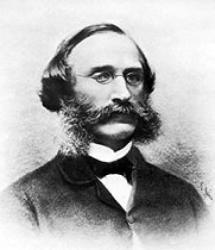
Frederick Lanchester
 Great Britain
- Frederick William Lanchester: English Polymath and Engineer
- Early Career and Inventions
- Automotive Engineering
- Unique Designs and Innovations
- Financial Difficulties and Decline
- Aeronautics and Research
- Personal Life and Legacy
Frederick William Lanchester: English Polymath and Engineer
Early Life and EducationFrederick William Lanchester, born in Lewisham, South East London in 1868, was an English polymath and engineer who made significant contributions to automotive engineering, aerodynamics, and operations research. He was the fourth of eight children born to Henry Jones Lanchester, an architect, and his wife Octavia, a governess. His father relocated the family to Brighton when Frederick was six, where he attended a preparatory school and a boarding school without distinction. Lanchester later recalled that during his youth, "Nature seemed to have been conserving her energies."
After obtaining a scholarship to attend Hartley Institution in Southampton, he earned another scholarship, after three years, to Kensington College, which is now part of Imperial College London. Lanchester supplemented his engineering education with evening classes at Finsbury Technical College. Despite his academic pursuits, he did not receive a degree.
Early Career and Inventions
Lanchester began his career in 1888, at the age of 20, as a draftsman for the Patent Office, earning £3 per week. During this time, he patented his first invention, the isometricograph, a tool for assisting designers in drawing, which established Lanchester as meticulous and dedicated to technical excellence.
In 1890, he patented a self-starting device for gas engines, which he sold profitably to the Crossley Gas Engine Company. With the capital gained from this venture, Lanchester rented a small workshop to pursue his own experimental work, finding fulfillment in the freedom to follow his own path. He resigned from the gas engine company, driven by a growing dissatisfaction with his work.
Automotive Engineering
Lanchester's interest in automotive engineering began with the construction of a gasoline engine, which he installed on a boat, making him the first person in England to invent a motorboat. The next logical step was to power a land vehicle, but England had strict regulations on "self-propelled carriages" at the time.
Undeterred, after the law was relaxed in 1895, Lanchester created his first automobile, which featured an unconventional engine with two counter-rotating crankshafts to minimize vibrations. Over time, he incorporated numerous innovations and designed his own components. His car won a gold medal for design and performance at the Richmond Automobile Show and participated in the Royal Automobile Club's famed 1000-mile race, completing it with only a minor breakdown.
To meet demand, Lanchester reorganized his workshop into Lanchester Engine Company, partnering with his brothers George and Frank, who handled the commercial aspects. Lanchester's cars boasted numerous advanced features, including a horizontally opposed engine mounted centrally on the chassis, a planetary gearbox, and a worm-drive rear axle. He also patented disc brakes in 1902, which he installed on some of his models.
Unique Designs and Innovations
One of Lanchester's most distinctive designs was the Lanchester "tonneau," featuring elongated, wide, and low-slung forms and an absence of a protruding bonnet. The driver's seat was positioned in front of the engine, with a passenger compartment behind it. Lanchester's continuous pursuit of innovation led him to experiment with fuel injection, turbochargers, hollow connecting rods, piston rings, plain bearings, silencers, and many other components now considered essential to modern vehicles.
Financial Difficulties and Decline
Despite their technical superiority, Lanchester's cars were expensive due to their complex designs and limited production. Sales were slow, with only 350 cars sold in the first five years of the 20th century. The company faced financial difficulties, and Lanchester, lacking business acumen, suspected embezzlement by the company's manager.
However, the core issue was that while Lanchester's original designs flourished until the 1920s, they could not compete with the growing dominance of mass-produced automobiles. Lanchester attempted to abandon the unconventional spirit of his early cars, adopting conventional steering wheels and headlights, but this did not improve sales. Disheartened, he lost interest in the automotive industry.
Aeronautics and Research
In the 1920s, Lanchester pursued his childhood fascination with aeronautics, establishing a research company focused on industrial developments and scientific studies. His groundbreaking work in aerodynamics, the properties of airfoils, and the theory of soaring flight, as well as his prediction of the outcome of air battles during the war (known as Lanchester's Laws of Force), earned him membership in the Advisory Council on Scientific and Industrial Research and numerous accolades. Ironically, many of his research findings were dismissed or shelved, as they were too advanced for their time.
Personal Life and Legacy
In 1919, at the age of 51, Lanchester married Dorothea Cooper, the daughter of the Vicar of St. Peter's Church in Lancashire. The couple resided at 41 Bedford Square in London, and in 1924, Lanchester designed and built their own home, Dyott End, in Moseley. They remained there for the rest of their lives, without children.
Lanchester was elected a Fellow of the Royal Society in 1922, and in 1926, the Royal Aeronautical Society awarded him a Fellowship and the Gold Medal. He lived in modest circumstances for the rest of his life, supported by the love and care of his devoted wife, in whose arms he passed away at Dyott End on March 8, 1946.
Frederick William Lanchester's legacy as a polymath, engineer, and researcher continues to inspire generations. His contributions to automotive engineering, aerodynamics, and operations research have left an enduring mark on the world, and his forward-thinking ideas have shaped the future of technology.