Fridrih 1
 Germany
- Frederick I Barbarossa: Holy Roman Emperor and Crusader
- Rise to Power and Domestic Policies
- Italian Campaigns
- External Power and Internal Challenges
- Crusades and Death
Frederick I Barbarossa: Holy Roman Emperor and Crusader
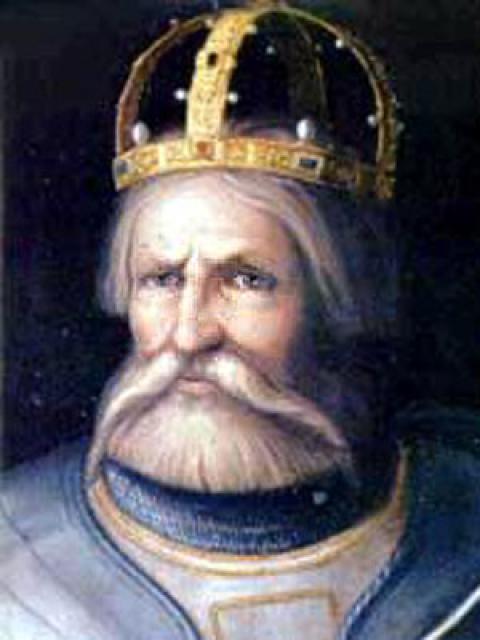
Frederick I, also known as Frederick Barbarossa, reigned as the Holy Roman Emperor from 1155 until his death in 1190. He was a key figure in the history of the empire, leaving a lasting impact on its institutions and territories.
Rise to Power and Domestic Policies
Born into the Hohenstaufen dynasty, Frederick became German King in 1152. He embarked on a mission to strengthen royal authority. In 1158, he passed a law requiring all vassals to provide military service to the empire, consolidating his power. He also attempted to establish a continuous royal domain in southwestern Germany and relied heavily on imperial ministerials for support.
Italian Campaigns
Frederick I had his sights set on Italy, where he aimed to assert control over the Lombard cities. He led five military campaigns into Italy, from 1154 to 1178. In 1158, he issued the Roncaglia Decrees, which placed the cities under the authority of imperial officials known as podestà.
However, the Lombard cities, dissatisfied with Imperial rule, formed the Lombard League in 1167 and forged an alliance with the Pope. In 1176, they inflicted a decisive defeat on Frederick I at Legnano, forcing him to renounce the Roncaglia Decrees. The Peace of Constance in 1183 marked the end of his ambitions in Italy.
External Power and Internal Challenges
Despite his setbacks in Italy, Frederick I's reign saw the height of the Holy Roman Empire's external power and prestige. However, his policy of playing different feudal factions against each other weakened the monarchy and strengthened the position of the princes.
His primary rival, Henry the Lion, refused to participate in the 1174 campaign to Italy. As a result, he was condemned by the princes, but his confiscated lands were not added to the royal domain but rather distributed among other princes, further undermining royal authority.
Crusades and Death
In 1189, Frederick I joined the Third Crusade. During the expedition, he drowned in the River Saleph in Asia Minor. His tragic death marked the end of an era and left a lasting legacy on the history of the Holy Roman Empire.