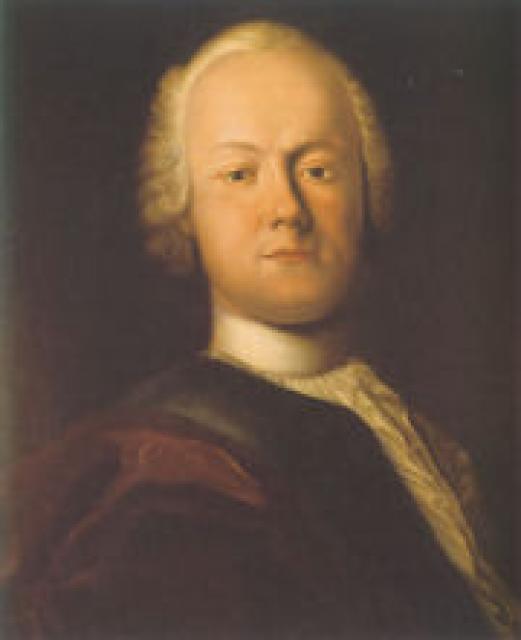
Fridrih Klopstock
 Germany
- Early Life and Influences
- Education and Early Works
- The Messiah
- Personal and Literary Life
- The Completion of "The Messiah"
- Later Years and Legacy
Early Life and Influences
Friedrich Gottlieb Klopstock was born in Quedlinburg, Germany, in 1724 to a civil servant. Growing up in a devout Christian household, he exhibited a strong religious fervor from a young age. Inspired by the teachings of pietism, he developed an ardent faith and a lifelong admiration for the Prussian king, Frederick II.
Education and Early Works
Klopstock pursued theological and philological studies at the universities of Jena and Leipzig (1745-1748), but his primary ambition was to become a poet. During this period, he immersed himself in the works of Horace, Milton, and Young. Influenced by the literary theories of Bodmer and Breitinger, he aligned himself with the "Swiss School," opposing the literary establishment of Johann Christoph Gottsched.
The Messiah
Inspired by Bodmer's vision of a German epic, Klopstock began composing his monumental work, "The Messiah." While still at university, he wrote the first three cantos in prose. After publishing them anonymously in 1748, the poem sparked widespread admiration, with Bodmer hailing Klopstock as the long-awaited German Milton. However, Gottsched and his followers received the work with hostility.
Personal and Literary Life
In 1748, Klopstock accepted a position as a tutor in Langensalza, where he fell in love with his cousin, Johanna Elisabeth von Winthem, whom he celebrated in his poetry as "Fanny." In 1750, he visited Bodmer in Zurich but found their relationship strained. He left Switzerland and traveled to Denmark, where King Christian V granted him an annual pension to support the completion of "The Messiah."
During this period, Klopstock produced numerous odes, lyric poems, and "bardic songs" that reflected his patriotic, religious, and amorous sentiments. These works earned him public acclaim and fostered a growing sense of German national identity.
The Completion of "The Messiah"
In 1773, Klopstock finally completed "The Messiah" after years of labor. The publication of the last five cantos marked a milestone in German literature. However, the poem's popularity gradually waned, overshadowed by the emergence of new literary movements.
Later Years and Legacy
In 1774, Klopstock accepted an invitation from the Margrave of Baden to reside in Karlsruhe, but he later returned to Hamburg, his pension intact. He married Anna Louisa von Winthem in 1792 and lived in relative obscurity until his death in 1803. Despite the decline of his literary fame, Klopstock remained an influential figure in German cultural history, remembered as a pioneer of the Enlightenment and a pivotal figure in the development of German literature.


