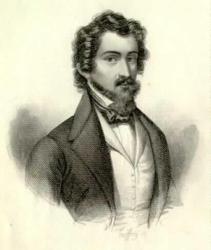
Rudaki
- The Life and Legacy of Rudaki, the Persian Master
- Birth and Origins
- Social Background and Early Education
The Life and Legacy of Rudaki, the Persian Master
Early Life and IdentityThe renowned Persian poet Rudaki was known by various names and titles. According to Sam'ani and Sheikh Manini, his full name was "Abu Abdullah Ja'far ibn Muhammad ibn Hakim ibn Abd al-Rahman ibn Adam al-Rudaki, the Samarkandi poet." In the 15th century, sources began to use a different kunya for the poet, as Daulatshah Samarqandi refers to him as "Ustad Abulhasan Rudaki." Valihi Daghistani states that his given name was Abdullah and his kunya was both Abu Ja'far and Abulhasan. Riza Quli-khan was unable to reconcile these discrepancies, noting that some believed his given name was Muhammad and his kunya was Abulhasan, while others believed his given name was Abdullah and his kunya was Abu Abdullah.
Birth and Origins
There is limited information available about Rudaki's early life. The only source that provides some details is the "Lubab al-Albaab" ("Heart of Hearts"). The exact date of his birth is unknown, but scholars have made various assumptions based on his year of death and some of his statements. European authors have suggested dates ranging from the early to late 9th century.
Regarding his birthplace, it was unknown until 1940. Some scholars believed it was Bukhara, while others thought it was Samarkand or the village of Panjrud. Based on written evidence and interviews with local residents, Tajik writer and literary scholar Sadriddin Aini concluded that Rudaki was born in the village of Rudak. He also identified the poet's burial site in the village of Panjrud.
Social Background and Early Education
The social class of Rudaki's family is uncertain. A single verse suggests that he came from a humble background and faced hardships:
> "I wore slippers and rode a donkey, but now I have reached a point where I recognize Chinese boots and an Arabian horse."
A. T. Tagirjanov believes that Rudaki's father may have been a cleric or an educated person. Noting that Rudaki memorized the Quran by the age of eight, Tagirjanov speculates that he began studying the holy book at the age of 5 or 6. It is likely that he would have needed to dedicate several hours a day to reading it, which could have been done by his parents, other villagers, or the village imam.