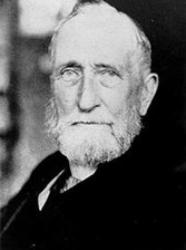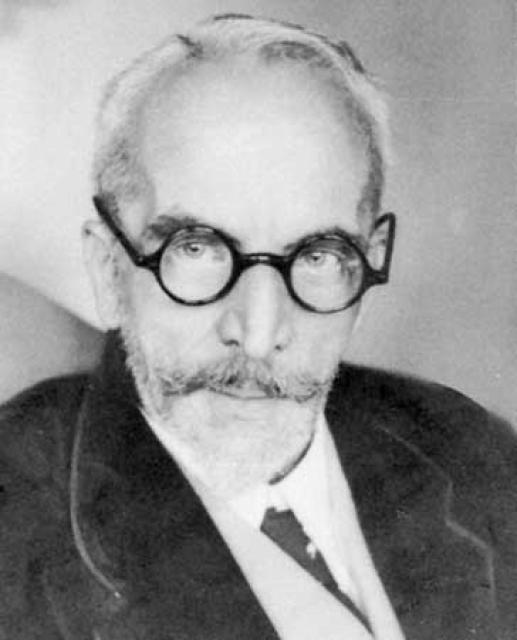
Fridrih Meyneke
 Germany
Biography of Friedrich Meinecke
Friedrich Meinecke was a German historian and opponent of Nazi ideology. He was born on October 30, 1862, in Salzwedel, Germany. Meinecke studied at the universities of Bonn and Berlin from 1882 to 1886, and later worked at the Prussian State Archives.
From 1893 to 1935, he served as the chief editor of the journal "Historische Zeitschrift" (Historical Journal). He was a professor at the universities of Strasbourg (1901-1906), Freiburg (1906-1914), and Berlin (1914-1928). Meinecke's works focused on the study of historical ideas, which he believed to be the driving force behind historical processes.
In his book "Cosmopolitanism and the National State" (1908), he presented the history of Germany's unification as the development of the idea of the nation-state. However, Germany's defeat in World War I led Meinecke to abandon his traditional view of the state as a moral ideal, as reflected in his work "The Idea of State Reason in the New History" (1924). He began to argue that irrational and "demonic" elements played a significant role in history.
While he was a supporter of Western liberalism and advocated for an alliance with Western powers, Meinecke also admired Prussian authoritarian rule and attempted to reconcile these opposing concepts in his works.
After Hitler came to power, Meinecke published a significant theoretical and methodological work called "The Origins of Historicism" (1936), in which he summed up his views on historical phenomena as purely individual complexes, not subject to any objective laws.
Meinecke did not share Hitler's crude and arrogant nationalism and frequently expressed his opposition in his journal, which led to his removal as chief editor and dismissal from his teaching position at the university in 1935.
Following the defeat of the Third Reich, Meinecke published the book "The German Catastrophe" (1946), in which he criticized many aspects of Hitler's political course and German imperialism but still defended the dual nature of the German spirit - both sublime and base, peaceful and warlike.
In 1948, the American occupying authorities appointed Meinecke as the rector of the newly established Free University in West Berlin, where he served until his death on February 6, 1954.