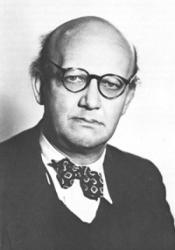
Hans Delbruck
 Germany
- Hans Delbrück: Pioneer of Modern Military History
- Early Life and Career
- Historical Method
- Key Works
- Controversy and Criticism
- Political Involvement
- Legacy
- Later Years and Assessment
Hans Delbrück: Pioneer of Modern Military History
Hans Delbrück was a German historian who revolutionized the field of military history. His groundbreaking work laid the foundation for a critical and scientific approach to the study of warfare.
Early Life and Career
Born in Bergen, Rügen, Delbrück studied at the Universities of Heidelberg and Bonn. He served as a soldier in the Franco-Prussian War and later became a tutor to Prince Waldemar of Prussia. His academic career began with a biography of Generalfeldmarschall August Neidhardt von Gneisenau.
Historical Method
Delbrück's method involved rigorous analysis of ancient sources, utilizing interdisciplinary perspectives from demography and economics. He sought to compare and contrast different eras of military history, tracing the evolution of military institutions.
Key Works
Delbrück's most influential work was his massive multi-volume "History of the Art of War within the Framework of Political History." Other notable works include "The Persian and Burgundian Wars" (1887), "The Strategy of Pericles, Delineated by the Strategy of Frederick the Great" (1890), and "The Life of Field Marshal Count Neidhardt von Gneisenau" (1894).
Controversy and Criticism
Delbrück's views on the Prussian king Frederick the Great were controversial. He challenged the prevailing admiration for Frederick, arguing for a more nuanced understanding of his military strategy. This sparked a debate with members of the German General Staff.
Political Involvement
Delbrück served as a member of the Prussian Parliament from 1884 to 1890. He was also a co-editor of the influential conservative journal "Preußische Jahrbücher." During World War I, he advocated for a negotiated peace, recognizing Germany's impending defeat.
Legacy
Delbrück's son, Max Delbrück, became a distinguished biophysicist. Delbrück's own work revolutionized the understanding of ancient warfare. He challenged exaggerated numbers in historical sources, demonstrated the importance of supply lines, and separated the concept of cavalry from that of the knight.
Later Years and Assessment
Despite the recognition of his "practical interest," Delbrück's work was criticized by Soviet historians due to his association with militarist circles in Germany. However, his influence on modern military history remains significant. He established a rigorous and comparative approach that continues to shape the field.