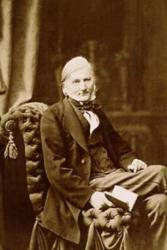
Friedrich August Quenstedt
 Germany
- Friedrich August Quenstedt
- Early Life and Education
- Career and Research
- Contributions to Geology
- Other Notable Works
- "Methode der Krystallographie" (1840)
- Legacy
Friedrich August Quenstedt
Friedrich August Quenstedt was a prominent German geologist and mineralogist who made significant contributions to the study of the Swabian Jura.
Early Life and Education
Born in Eisleben, Germany, on July 10, 1809, Quenstedt pursued his education at the Bergakademie Freiberg and the University of Berlin. He completed his studies in 1834 and received his doctorate in 1835.
Career and Research
In 1837, Quenstedt was appointed professor of mineralogy, geology, and paleontology at the University of Tübingen, where he spent the rest of his career. His primary research focused on the Swabian Jura, a geological formation rich in fossils.
Contributions to Geology
Quenstedt's most notable contributions include:"Das Flötzgebirge Württembergs" (1851)
"Der Jura" (1857)
"Handbuch der Petrefaktenkunde" (1882)
"Petrefaktenkunde Deutschlands" (1849)
"Die Ammoniten des schwäbischen Jura" (1884)
These works provided a comprehensive understanding of the Swabian Jura's stratigraphy, paleontology, and geological history.
Other Notable Works
Beyond his research on the Swabian Jura, Quenstedt also published:"Epochen der Natur" (1861), which outlined his theory of geological time
"Methode der Krystallographie" (1840)
"Handbuch der Mineralogie" (1877)"Grundriss der bestimmenden und rechnenden Krystallographie" (1873)
These works contributed to the fields of mineralogy and crystallography.
Legacy
Friedrich August Quenstedt passed away in Tübingen on December 21, 1889. He left behind a remarkable legacy as a pioneering geologist and paleontologist whose work continues to influence our understanding of the Earth's history.