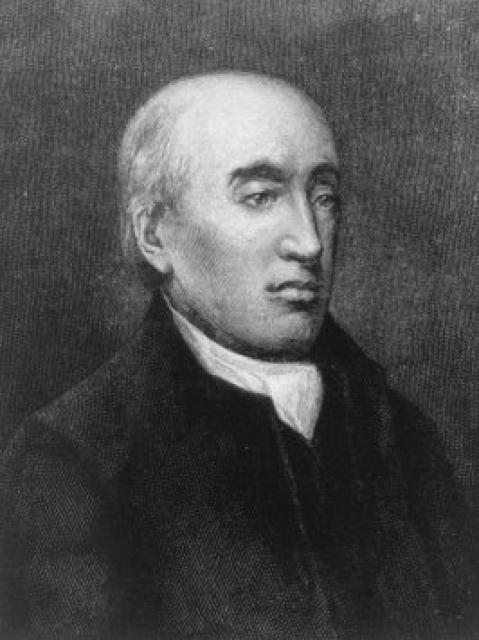
James Hutton
 Great Britain
Biography of James Hutton
James Hutton was a Scottish geologist, physician, naturalist, chemist, and experimental farmer who is considered the father of modern geology and geochronology. He was born on June 14, 1726, in Edinburgh, Scotland. His father, a wealthy merchant and treasurer of Edinburgh, died when he was young. Despite this loss, his mother, Sarah Balfour, managed to provide him with an education at the Royal High School, one of the oldest schools in the country. It was here that Hutton developed a keen interest in mathematics and chemistry, and at the age of 14, he became a student at the University of Edinburgh, studying Latin and Greek alongside his other subjects.
At the age of 17, Hutton became a pupil of a lawyer, but his passion for chemical experiments surpassed his interest in law. The following year, he became an assistant to a doctor and began attending lectures on medicine at the University of Edinburgh. Three years later, Hutton traveled to the University of Paris and then went on to obtain a medical degree in Leyden in 1749, with a dissertation on the circulatory system. Around 1747, Hutton had a son with a woman named Miss Edington. Although he provided financial support, Hutton had little contact with the child, who later became a postal worker in London.
After completing his degree, Hutton relocated to London before returning to Edinburgh in the mid-1750s. He resumed his chemical experiments, working closely with his friend James Davie. Their work on producing ammonium chloride from soot led to a successful partnership in the field of chemistry, where they produced crystalline salt used for dyeing, metalworking, and as smelling salts. Prior to this, alum was imported from Egypt, but Hutton and Davie's innovation allowed for its production domestically.
Hutton inherited two farms in Berwickshire, Slighhouses and Nether Monynut, from his father. In the early 1750s, he moved to Slighhouses, where he conducted experiments in agriculture, introducing numerous improvements. He recorded his ideas and observations in an unpublished treatise called 'The Elements of Agriculture.' His work on the farm sparked his interest in meteorology and geology. In 1753, he wrote a letter expressing his growing fascination with the study of the Earth's surface, observing every pit, trench, or riverbed he came across with curious concern.
Hutton's theoretical ideas in the field of geology began to form in 1760. Although he continued his farming activities, in 1764, he embarked on a geological excursion to northern Scotland with James Clerk Maxwell, an ancestor of the famous physicist and mathematician James Clerk Maxwell. In 1768, Hutton returned to Edinburgh, leasing out his farms, but he continued to show interest in agricultural improvements and research. Alongside his other pursuits, he developed a red dye from madder roots.
In 1770, Hutton built a house on St John's Hill, which later became the Balbirnie family home. He was one of the most influential figures of the Scottish Enlightenment and associated with many first-rate scientists, including mathematician and geographer John Playfair, philosopher David Hume, and economist Adam Smith. Although Hutton held no positions at the University of Edinburgh, he communicated his scientific research through the Royal Society of Edinburgh. From 1767 to 1774, he used his knowledge in geology to contribute to the construction of the Forth and Clyde Canal.
In the last 15 years of his life, Hutton focused on studying geological formations. He passed away on March 26, 1797, in Edinburgh.



