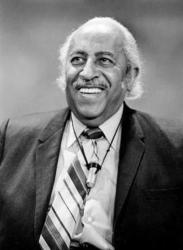
Friedrich Bodenstedt
 Germany
- Friedrich Bodenstedt: A Bridge Between Cultures
- Early Life and Education
- Immersion in Russian Culture
- Connection to the East
- Literary Accomplishments
- Controversy and Legacy
Friedrich Bodenstedt: A Bridge Between Cultures
Friedrich Bodenstedt, a German writer and renowned translator, dedicated his life to introducing Russian and Eastern literature to the Western world.
Early Life and Education
Friedrich Bodenstedt was born on April 22, 1819, in Peine, near Hanover. He pursued his early education in Göttingen and Munich, where he developed a passion for writing and translation.
Immersion in Russian Culture
In 1841-43, Bodenstedt became a tutor in Moscow, where he encountered the works of Russian literary giants such as Pushkin, Koltsov, and Fet. Inspired by their artistry, he began translating their poems into German.
Connection to the East
In Tiflis, Bodenstedt delved into Eastern poetry, studying under the renowned Azerbaijani poet Mirza Shafi Vazeh. He recorded and translated Persian and Azerbaijani verses, publishing his collection "Thousand and One Days in the East" in 1850.
Literary Accomplishments
Bodenstedt's most notable literary achievement was his two-volume translation of Lermontov's poems in 1852. His comprehensive study of Lermontov's legacy garnered critical acclaim. He also penned original works, including the poem "Ada's Lezginka" and the tragedies "Dmitry" and "Emperor Paul."
Controversy and Legacy
Bodenstedt's "Songs of Mirza Shafi" (1851) raised controversy, as he claimed the translations as his own original poetry inspired by Eastern motifs. Despite this, his efforts in promoting Russian and Eastern literature played a significant role in shaping literary perceptions in Germany. Bodenstedt passed away on April 18, 1892, in Wiesbaden, leaving an enduring legacy as a bridge between different cultural worlds.