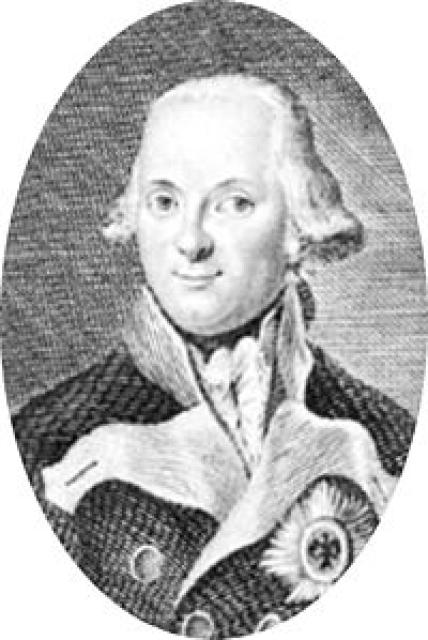
Friedrich Hohenlohe
 Russia
- Prince Friedrich Ludwig von Hohenlohe-Ingelfingen
- Command during the Rhine Campaign
- High Command in the 1806 Campaign
- Battle of Jena and Surrender
- Imprisonment and Retirement
- Later Life and Legacy
Prince Friedrich Ludwig von Hohenlohe-Ingelfingen
Early Life and Military ServiceCatholic Aristocratic Lineage:Friedrich Ludwig von Hohenlohe-Ingelfingen was born on January 31, 1746, into the Catholic branch of an ancient Württemberg-Silesian aristocratic family.
Military Service in the Prussian Army:In 1768, he joined the Prussian army, where he rose through the ranks. He participated in the War of the Bavarian Succession and earned the rank of colonel for his distinctions.
Command during the Rhine Campaign
Commander of an Army Corps:During the Rhine Campaign (1792-1794), Hohenlohe commanded an army corps, playing a crucial role in battles such as Oppenheim, Pirmasens, and Hornbach.
Siege of the Weissenburg Lines:He particularly distinguished himself in the storming of the Weissenburg fortified lines, leading the vanguard.
Victory at Kaiserslautern:On September 20, 1794, he inflicted a defeat on the enemy at Kaiserslautern. His actions were highly praised by contemporaries, including Gebhard Blücher.
High Command in the 1806 Campaign
Lower Silesian Infantry Inspector:In 1806, Hohenlohe headed the Lower Silesian Infantry Inspection and was chief of the 32nd Infantry Regiment.
Second-in-Command of the Prussian Army:During the 1806 campaign, he was appointed second-in-command of the Prussian army, overseeing the Silesian Corps and Saxon troops. August Wilhelm von Massow was Hohenlohe's chief of staff, enjoying his complete trust and orchestrating the operations' planning.
Battle of Jena and Surrender
Disaster at Jena:On October 14, 1806, Hohenlohe's forces suffered a catastrophic defeat at the Battle of Jena.
Failed Retreat Plan:His retreat plan towards Magdeburg and Prenzlau crumbled.
Surrender at Prenzlau:His exhausted army retreated through Oranienburg to Prenzlau, aiming to reach Stettin. On October 28, he surrendered at Prenzlau with 17,000 men and 64 cannons after accepting Joachim Murat's false assurances of being surrounded by a vast French force.
Imprisonment and Retirement
Prisoner of War in France:Hohenlohe was taken to France as a prisoner of war.
Release and Resignation:He was released in 1808 and forced to resign from the military.
Later Life and Legacy
Retirement in Silesia:He spent his remaining years in his estate in Silesia, passing away on February 15, 1816. His surrender at Prenzlau signaled the beginning of widespread capitulations among Prussian troops, contributing to Prussia's defeat in the 1806 campaign. Despite this setback, Hohenlohe's military leadership and strategic decisions during the Rhine Campaign left a lasting legacy in Prussian military history.