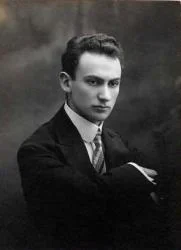
Friedrich Silcher
- Teacher in Württemberg
- Tübingen and the Choral Movement
- Songs That Traveled
- Personal Life and Final Years
- Legacy
Friedrich Silcher helped turn songs that once belonged to poetry books, local traditions, and concert halls into music that whole communities could sing together. A composer, teacher, church musician, and collector of folk melodies, he became a central figure in the nineteenth-century German choral movement. His settings of “Die Lorelei,” “Ännchen von Tharau,” and “Am Brunnen vor dem Tore” became so familiar that many listeners came to know the melodies as folk songs in their own right.
Teacher in Württemberg
Silcher was born Philipp Friderich Silcher on June 27, 1789, in Schnait, a village in Württemberg now part of Weinstadt. His father was a village schoolteacher, and Friedrich initially followed the same path. During teacher training in Geradstetten and Fellbach, he gained practical experience in music. He later worked as a private tutor and as a girls’ schoolteacher in Ludwigsburg, where concerts by Carl Maria von Weber strengthened his desire to devote himself to music.
In 1815, Silcher moved to Stuttgart to teach music privately. There he came into contact with composer Conradin Kreutzer and, likely, the pianist and composer Johann Nepomuk Hummel, from whom he received instruction. His early life had not been mapped out as a conventional composer’s career; teaching, church music, and community singing remained at the heart of his work even after he entered academic life.
Tübingen and the Choral Movement
In 1817, Silcher was appointed the first university music director at the University of Tübingen. He held the position for the rest of his life, also teaching at the Evangelical seminary. Tübingen became his base for an energetic program of musical education. He founded the Akademische Liedertafel in 1829 and the Oratorio Society in 1839, leading both groups and helping build a culture in which students and townspeople could make music together.
Silcher believed that music should be accessible to ordinary singers. He collected and arranged melodies from German and other musical traditions, then adapted them for amateur choirs and domestic singing. His arrangements often favored clear, memorable tunes and simple harmonies that a group could learn and sing together. The approach suited the growing network of singing societies and helped make choral music a social activity, not just a performance for trained professionals.
Songs That Traveled
Among Silcher’s best-known works is his setting of Heinrich Heine’s poem “Die Lorelei,” composed in 1838. Its flowing melody gave the poem a powerful life beyond the page. He also wrote a widely sung tune for “Ännchen von Tharau” and arranged the Schubert song “Am Brunnen vor dem Tore” for men’s chorus, helping it become widely known as “Der Lindenbaum.” In 1842, he composed the melody later used with the hymn text “So nimm denn meine Hände.” He also set Ludwig Uhland’s “Ich hatt’ einen Kameraden,” which became an enduring song of remembrance.
Silcher’s work involved both original composition and adaptation, and that distinction matters: he did not write every text or invent every melody associated with his name. His talent lay in recognizing what a tune could do in a new setting and shaping it so groups could sing it with confidence. Between 1826 and 1860 he issued collections of German and foreign songs, while his broader catalog included more than a thousand compositions and arrangements.
He also wrote instructional works on harmony and composition and sought to improve music education in schools and churches. His efforts to introduce multipart singing into Württemberg schools did not fully succeed, but his published collections and choral organizations had a more lasting effect. In 1852, the University of Tübingen awarded him an honorary doctorate in recognition of his contributions to music and education.
Personal Life and Final Years
Silcher married Rosine Luise Enßlin, and they had three children. His professional life remained closely tied to Tübingen, where he composed, taught, conducted, and organized musical societies. He continued working at the university until shortly before his death on August 26, 1860. He was buried in Tübingen’s city cemetery.
Legacy
Silcher’s melodies moved easily between formal and popular settings. A tune written for a poem or reshaped for a choir could pass into everyday use, sung at home, in schools, and by local societies. That reach made him one of the most influential German song composers and arrangers of his time. His work still carries the sound of communal music-making: direct, memorable, and designed to bring many voices together.