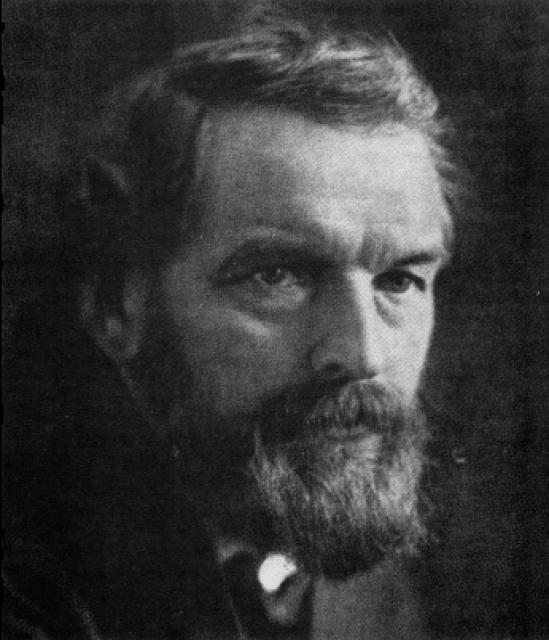
Silvio Gesell
 Germany
- Biography of Silvio Gesell
- Early Career and Travels
- Works and Ideas
- Pacifism and Legacy
- Later Years and Death
Biography of Silvio Gesell
Silvio Gesell was a German entrepreneur, economist, and author. He was born in 1862 in Oranienburg, Germany, to a Prussian father and a Belgian mother. He was the seventh of nine children in his family. After finishing school, Silvio was unable to attend university and had to start working in the postal service. However, he did not enjoy this job and soon moved to Berlin to become a merchant, following in his brother's footsteps.
Early Career and Travels
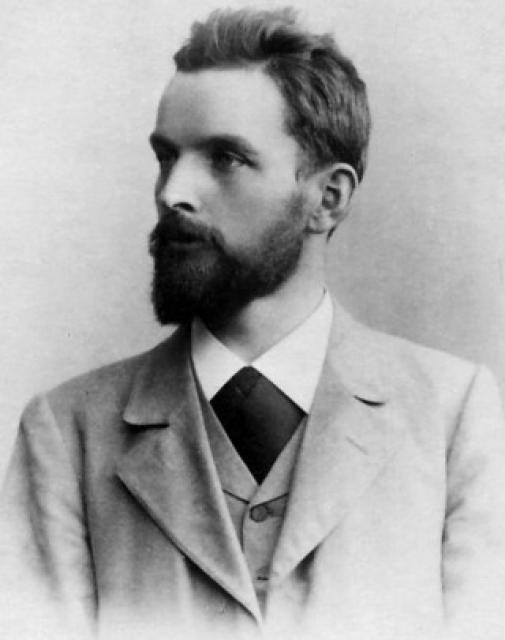
In his search for his life's purpose, Silvio Gesell traveled to Malaga, Spain, where he worked as a correspondent. He later returned to Berlin and served in the military. In 1887, Silvio embarked on a journey to Buenos Aires, Argentina, where he had already become a successful merchant and ran a business with his brother. The economic crisis in Argentina sparked Gesell's interest in monetary issues, leading him to publish his first work on the topic in 1891, titled "Reforming Monetary Affairs as a Path to the Social State" ('Die Reformation des Münzwesens als Brücke zum sozialen Staat'). This was followed by his work 'Nervus rerum', which also addressed monetary problems. Soon, his economic writings started to be published one after another.
Works and Ideas
In 1906, Gesell moved to Switzerland, where the first part of his seminal work, "The Right to Full Employment," was published. The second part, "A New Understanding of Interest," was published in Berlin in 1911. Gesell's books became incredibly popular and were reprinted multiple times during his lifetime. His most significant work, "The Natural Economic Order," was published in 1916 and proposed an alternative monetary system. This work became Gesell's signature, as he constantly criticized the existing monetary policies. He believed that there should be a system where money becomes a paid government service, and money owners are required to regularly pay a small sum to the government for the right to use state-issued money. However, experiments carried out in relation to his proposals did not yield stable positive results, and they were eventually abandoned. Thus, Gesell's theory of "free money," which fascinated many, did not find practical application.
Pacifism and Legacy
Gesell is known for his prophetic prediction of the start of World War II, which he made in 1918, right after the end of World War I when everyone else was preoccupied with peace. He wrote in a letter to his publisher, "Despite the sacred oath sworn by nations to condemn war for all time, despite the millions' call for 'No more war!', contrary to all hopes for a better future, I must say today that if the current monetary system maintains an interest-based economy, I dare to assert that within 25 years, we will face a new, even more devastating war." Gesell considered himself a Man of Peace and was an unwavering pacifist. He believed that the Earth should belong to all people, regardless of race, gender, class, wealth, religion, or age, and that borders should be merely a conditional concept. In 1919, Gesell faced criticism when he briefly visited the Ministry of Finance of the short-lived Bavarian Soviet Republic. He was removed from his ministerial post after only 7 days and subsequently condemned by a military tribunal. However, Gesell never gave up on his ideas, which many considered controversial.
Later Years and Death
Gesell frequently moved between Switzerland, Argentina, and Germany. In 1927, he finally returned to Oranienburg, Germany. Silvio Gesell passed away on March 11, 1930. Overall, with his first publication in 1891, Silvio Gesell became one of the first to provide a critical assessment of the monetary system. This initiative laid the foundation for broader research into the causes of social issues and reformative transformations.


