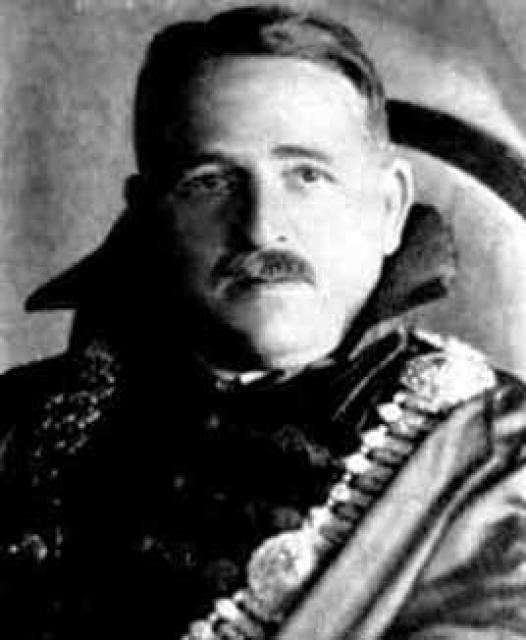
Frigyes Riesz
 Hungary
- Frigyes Riesz: The Father of Functional Analysis
- Academic Career
- Pioneering Contributions to Functional Analysis
- Post-War Recognition
- Legacy and Honors
Frigyes Riesz: The Father of Functional Analysis
Early Life and EducationFrigyes Riesz, an eminent Hungarian mathematician, was born into a Jewish family in 1902 in Győr, Austro-Hungary. His father, Ignaz Riesz, was a medical practitioner. Frigyes showed a keen interest in mathematics from a young age.
He pursued his higher education at esteemed institutions such as Budapest, Göttingen, and Zurich. In 1902, he earned his doctorate from the University of Budapest with a dissertation in geometry.
Academic Career
After a brief stint as a high school teacher, Riesz secured a position at the University of Budapest. In the years that followed, he made significant contributions to the study of Lebesgue-integrable functions and normed functional spaces.
Pioneering Contributions to Functional Analysis
In his influential paper from 1918, Riesz laid the groundwork for the axiomatic theory of Banach spaces. This theory was later fully developed by Stefan Banach two years later.
In 1911, Riesz took up a professorship at the University of Kolozsvár (now Cluj). However, after the Treaty of Trianon in 1920, Kolozsvár became part of Romania, prompting the establishment of a new university in Szeged, Hungary.
In 1922, Riesz co-founded the Bolyai János Mathematical Institute in Szeged with Alfred Haar. Together, they launched the journal "Acta Scientiarum Mathematicarum," which quickly gained prominence as Hungary's leading mathematical journal.
Post-War Recognition
In 1945, Riesz was appointed to the Chair of Mathematics at the University of Budapest. Throughout his career, he was recognized for his groundbreaking contributions by prestigious institutions around the world.
Legacy and Honors
Frigyes Riesz is widely regarded as the founder of modern functional analysis. His work laid the foundation for the development of many important mathematical theories.
He was a member of leading scientific academies in Hungary, France, and Sweden. He also received honorary doctorates from the universities of Szeged, Budapest, and Paris.


