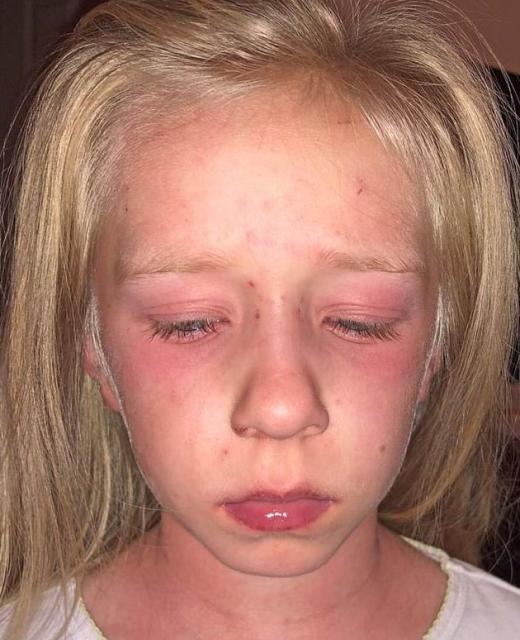
Gabriella Bondi
 USA
USA- Misdiagnosis leads to near-death experience
- Toxic Shock Syndrome: A Deadly Threat
- Raising Awareness
- Misdiagnoses and the importance of persistence
- TSS: A Serious Threat
A Young American Girl's Life-Threatening Battle with Toxic Shock Syndrome
Misdiagnosis leads to near-death experience
In August of last year, nine-year-old Gabriella Bondi of Colorado faced extreme dry skin, which her pediatrician initially dismissed as a minor allergic reaction. "We were sent home thinking she would get better," recalled Christina Bondi-Cerato, Gabriella's 35-year-old mother. "But by the end of that evening, her face was on fire. Within hours, her body was covered in a painful, red rash." The young girl also began losing her hair.
After another visit to the doctor, Bondi's symptoms were dismissed as scarlet fever, and she was again sent home with medications. Within 24 hours, the girl was writhing in pain and clawing at her skin. "I knew we had to get back to the hospital as quickly as possible," Christina added. "The doctor took one look at her and her history and called the ambulance to take Gabriella to the children's hospital. It was a 40-minute ride."
Toxic Shock Syndrome: A Deadly Threat
At the hospital, the patient was given heavy antibiotics, and the medical team considered the possibility of "something like staphylococcal scalded skin syndrome, something like Stevens-Johnson syndrome or toxic epidermal necrolysis." Eventually, Gabriella was diagnosed with toxic shock syndrome (TSS) caused by impetigo, a bacterial skin infection that requires antibiotic treatment.
The invasive bacteria had released harmful toxins into the bloodstream, which traveled to Gabriella's internal organs and began to damage them. The toxins also killed skin tissue, causing the rash that had spread all over her body.
Raising Awareness
Christina decided to share shocking photos of her daughter to raise awareness about this rare but potentially fatal condition and to help others identify it early. "It's been just over a year," Bondi-Cerato said. "The first several months of her recovery were especially hard. She had a lot of hair loss, and she continues to suffer from skin imperfections and dryness all over her body. She's come a long way."
"Gabriella still battles with immune system issues and gets sick more easily," Christina added. "When they finally figured out what was causing the TSS, the impetigo was so minimal you would never think it could cause something so destructive."
Misdiagnoses and the importance of persistence
Bondi-Cerato emphasized the frustration and fear she felt as doctor after doctor misdiagnosed her daughter's condition and as she struggled to figure out what was wrong. She credits her persistence in "bugging" doctors with pushing for answers.
Her daughter's prognosis is optimistic, but the risk of TSS will increase once she starts her period; Bondi is advised not to use tampons or menstrual cups. "We have to be vigilant," Christina said. "We have to check her skin for signs of redness, itching, or cracking."
TSS: A Serious Threat
According to medical experts, TSS affects roughly one or two women out of every 100,000. The mortality rate is between 5-15%, and the condition recurs in 30-40% of cases. Severe cases can require surgery to remove necrotic tissue, and in rare cases, amputation may be necessary.
To prevent TSS, women are recommended to use the lowest absorbency tampons for their menstrual flow, alternate between tampons and pads, and wash their hands before and after inserting or removing products.