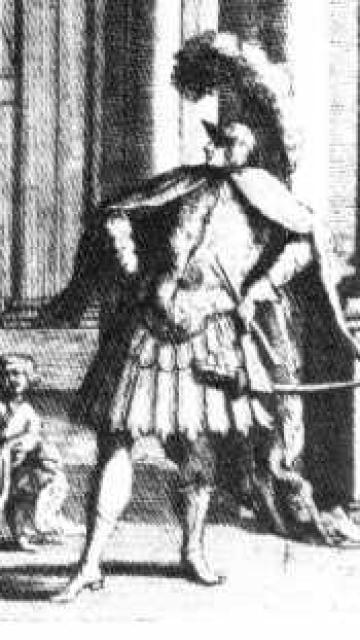
Gaetano Berenstadt
 Italy
Italy- Biography of Gaetano Berenstadt
- Early Life and Musical Training
- Career in London
- Later Career and Legacy
- Personal Interests and Reputation
- Musical Style and Roles
Biography of Gaetano Berenstadt
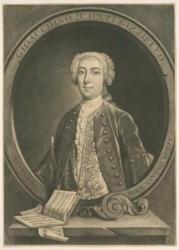
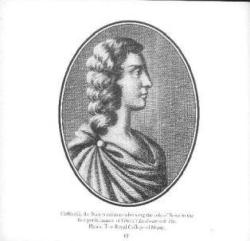
Gaetano Berenstadt was an Italian operatic alto castrato singer, best known for his collaboration with composer George Frideric Handel. He participated in premieres of three of Handel's operas. Over the course of his 27-year career, Berenstadt performed in 55 operas, 33 of which were new works.
Early Life and Musical Training
Gaetano Berenstadt was born on June 7, 1687, in Florence, Italy. His parents were Germans, and his father played the viola in the orchestra of Grand Duke Cosimo III of Tuscany. Berenstadt studied under the renowned Italian composer Francesco-Antonio Pistocchi. He sang in Naples and Bologna before visiting London in 1717, where he appeared as Argante in the revived production of Handel's "Rinaldo." The original bass role of the Jerusalem ruler was transposed for an alto castrato voice, and Berenstadt's version of Argante was supplemented with three new arias.
Career in London
After returning to Italy, Berenstadt performed in Rome and Milan before returning to London in 1722 to sing for the composers of the Royal Academy of Music. During this time, he sang the role of Tolomeo in the premiere of Handel's "Giulio Cesare," performed the lead role in "Flavio," and sang the part of Adelberto in "Ottone." He also appeared in works by Giovanni Battista Bononcini and Attilio Malachia Ariosti. Berenstadt left London in 1724 and returned to Italy.
Later Career and Legacy
In 1726, Berenstadt began performing music by famous composers in the emerging galant style in Rome and other Italian cities. He participated in the premieres of three operas by Leonardo Vinci and two new works by Johann Adolph Hasse. His last stage performance took place in Florence in 1734. In his final years, he published several musical works and suffered from rheumatism. Berenstadt died in Florence on December 9, 1734.
Personal Interests and Reputation
Berenstadt's passion for rare books and artworks is evident in the 42 surviving letters he wrote. He frequently bought and sold both books and artworks and amassed an impressive library that included numerous incunabula, rare books printed before 1501. Poet and librettist Apostolo Zeno described Berenstadt as possessing "excellent knowledge of our best authors and exquisite taste in Italian poetry and oratory."
Musical Style and Roles
Charles Burney, an 18th-century composer and musicologist, described Gaetano Berenstadt as a castrato with a massive, bulky build. In operas, he typically portrayed villains and tyrants, suggesting that his physical attributes made him unsuitable for performing more typical alto roles of romantic lovers and female characters. Berenstadt never sang a single female part. The arias created specifically for him showcase a limited vocal range but outstanding vocal virtuosity. These arias often lack gradual progression but feature sudden leaps and are rarely slow or mournful. In London, his roles usually consisted of three arias, while in Italy, the number ranged from four to eight, both solo and in duets.