Gaetano Guadagni
 Italy
ItalyBiography of Gaetano Guadagni
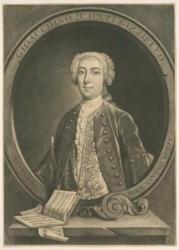
Gaetano Guadagni was an Italian opera singer, castrato, and mezzo-soprano. He was born in 1728 in Lodi, Italy. In 1746, he sang in the cappella of Sant'Antonio in Padua, and made his operatic debut in Venice in the same year. However, he was soon expelled from the cappella as the church did not approve of his decision to sing in opera.
Guadagni's mezzo-soprano voice remained unchanged over time, as he had been castrated in childhood like many other singers of his time. Within a few years, he could be seen in London as a member of the theatrical company Giovanni Francesco Crosa. He quickly gained attention due to his incredible beauty, and castrato singers were popular among European women.
It is known that the great composer George Frideric Handel was particularly fond of Guadagni. In 1750, Handel rewrote an aria from the opera "Messiah" three times specifically for him. In addition to operas, Guadagni also performed in Handel's oratorios.
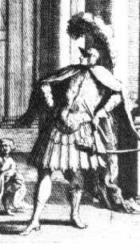
From 1755 to 1761, Guadagni enjoyed great success thanks to his collaboration with Handel and others. He was even forgiven for his occasional arrogance towards the audience, as he never gave encores or bows. Despite his difficult temperament, he was the perfect candidate for the role of Orpheus in Gluck's "Orfeo ed Euridice," which he premiered in Vienna on October 5, 1762. He also performed the lead role in Gluck's opera "Telemaco" in 1765. Guadagni was involved in operas by Vivaldi, Hasse, Metastasio, Jommelli, and Gassmann, among others.
By the late 1760s, Guadagni's operatic fame began to decline. In 1769, he went to London for the last time, where due to the mismanagement of his impresario, Honourable George Hobart, there were issues with his concerts. As a result, Guadagni left the company and continued to perform in another theater. In 1770 and 1771, he presented his famous role of Orpheus in various productions.
In 1773, Guadagni went to Munich with Maria Antonia of Bavaria, Dowager Electress of Saxony, and performed there for a while. After retiring from the stage, he settled in Padua and built a magnificent house in the city. He was welcomed back into the chapel of the Sant'Antonio church and remained there until his death. His last performance was in Antonio Calegari's opera "Deucalione e Pirra" in 1781. Despite his advanced age, those who heard him during this period claimed that his voice was still strong and youthful. Later, he voiced the puppet Orpheus from behind the scenes, purely for pleasure.
Between 1785 and 1787, Guadagni suffered a stroke that affected his speech, putting an end to his performances. He passed away on November 11, 1792. His portrayal of Orpheus in "Orfeo ed Euridice" is considered his greatest achievement and contribution to Italian opera.