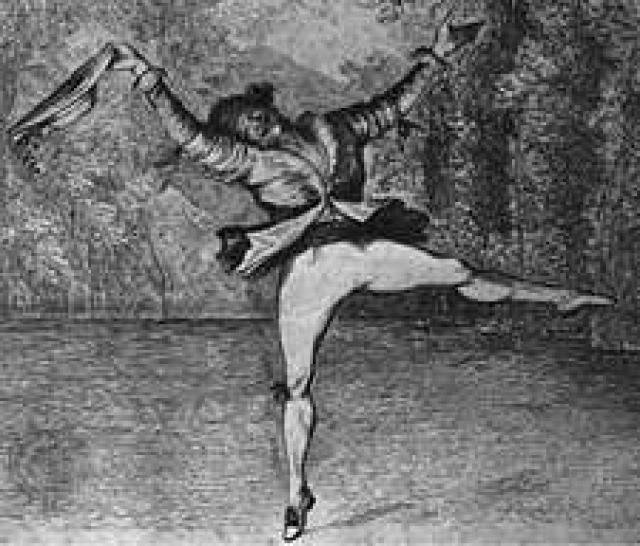
Gaetano Vestris
 Italy
Italy- Early Life and Career
- Arrival in Paris and Training
- Rise to Fame as "God of Dance"
- Controversial Persona and Artistic Legacy
- As Teacher and Choreographer
- Later Career and Legacy
- Notable Performances
- - Boreas in Rameau's "Galante India"
Early Life and Career
Gaetano Vestris was born into a poor family in Italy. Despite financial constraints, his father managed to provide some education for his children. Notably, three of them became renowned ballet dancers: Gaetano, his elder sister Teresa, and his younger brother Angiolo.
Arrival in Paris and Training
Following Teresa's success as a ballerina in Europe, Gaetano and Angiolo were summoned to Paris in 1747. Gaetano became a student of Louis Dupré, a notable French dancer. He also enrolled at the Royal Academy of Music in Paris, where he made his debut in 1749. By 1751, he had risen to the rank of soloist at the Royal Academy.
Rise to Fame as "God of Dance"
Gaetano Vestris quickly gained acclaim for his exceptional artistry, mimetic skills, and technical prowess. He became one of the first dancers to perform on stage without a mask, using his expressive facial movements to enhance the impact of music and dance. His performances were so captivating that he earned the nickname "God of Dance."
Controversial Persona and Artistic Legacy
Vestris was known for his fiery temper and unbridled nature. He often clashed with authorities, resulting in his dismissal from the theater in 1754. However, he triumphantly returned to the Paris Opera in 1756. Despite his fame, Vestris remained illiterate and had a controversial reputation for his uninhibited behavior. Nonetheless, his artistic contributions were immense, as he introduced new elements of freedom and elegance to dance.
As Teacher and Choreographer
Gaetano Vestris was highly sought after as a teacher, instructing members of wealthy families and even the French King Louis XVI. From 1770 to 1776, he served as the ballet master and teacher at the Paris Opera. He choreographed several ballets during this period, including "Endymion" and "Le Nid d'oiseau."
Later Career and Legacy
Vestris continued to perform on stage until 1782. Even in his retirement, he remained involved in ballet theaters, including in London. In 1804, he collaborated with the director of the Paris Opera ballet to restage Noverre's "Jason and Medea," one of Vestris' most iconic roles. He passed away in 1808 and was buried at the Montmartre Cemetery in Paris.
Notable Performances
- Jason in Noverre's "Jason and Medea" (1763, 1767, 1770, 1775, 1780, and 1804)
- Boreas in Rameau's "Galante India"
- Rinaldo in Quinault and Lully's "Rinaldo and Armida"- Cephalus in Grétry's "Cephalus and Procris" (1773)
- Endymion in his own "Endymion" (1773)
- Ninette in "Ninette à la cour" (1781)
- Death in Noverre's "The Death of Hercules" (1791)


