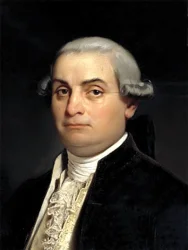
Gaius
Gaius is one of the most influential Roman legal thinkers—and one of the least knowable as a person. Only his single name survives, and little can be established about his origins or private life. Yet his clear, structured textbook, the *Institutes*, helped preserve Roman law for later generations and became a model for Justinian’s legal teaching.
A Life in the Shadows
Gaius was active in the second century CE. His writings show that he worked during the reigns of Antoninus Pius and Marcus Aurelius; he was lecturing in 160 or 161 and was still alive in 178. Beyond that, the record is remarkably thin. Scholars have debated whether he taught in Rome or in an eastern province, perhaps after studying in the capital. His exact birthplace, full name, career path, and personal circumstances remain unknown.
He identified himself with the Sabinian school of Roman jurists, a tradition associated with the legal thinker Masurius Sabinus. Gaius’s surviving work shows a teacher’s instinct for organizing difficult material, though whether teaching was his main occupation cannot be known for certain.
The *Institutes*
Gaius’s best-known work was the *Institutes*, an introductory guide to Roman private law written around 160 CE. It organized the subject into four books, moving from the legal status of people to property and obligations, then to legal actions and procedure. The clear framework made Roman law easier to teach and gave later legal writers a durable structure to build upon.
He was a prolific author beyond that textbook. Ancient references and surviving fragments point to commentaries on the Twelve Tables, the edicts of magistrates, and other areas of law. Most of these works have not survived intact, but their range suggests that Gaius addressed both the foundations of Roman legal tradition and the law as it operated in practice.
A Manuscript Rediscovered
For centuries, Gaius’s work was known mainly through later citations and adaptations. In 1816, a manuscript in Verona, reused and overwritten with a later text, revealed a substantial portion of the original *Institutes*. The discovery gave scholars an unusually direct view of classical Roman legal thought, rather than one filtered through the editors of later compilations.
Justinian’s sixth-century *Institutes* drew heavily on Gaius’s structure and teaching. Much later, the *Institutes* also influenced the organization of modern civil law. Gaius became especially famous after his own lifetime: in 426 CE, imperial legislation included his writings among the authorities recognized for legal citation.
Legacy
Gaius left no known biography, portrait, or personal testimony that would let later readers glimpse the man behind the name. His intellectual legacy is more vivid. Through a student-centered textbook and a manuscript that narrowly survived as a palimpsest, he helped transmit Roman law across centuries and shaped how generations of students learned to understand it.