Cesare Beccaria
- Education and the Milanese circle
- A radical book on punishment
- Scholar and public official
- Later years and legacy
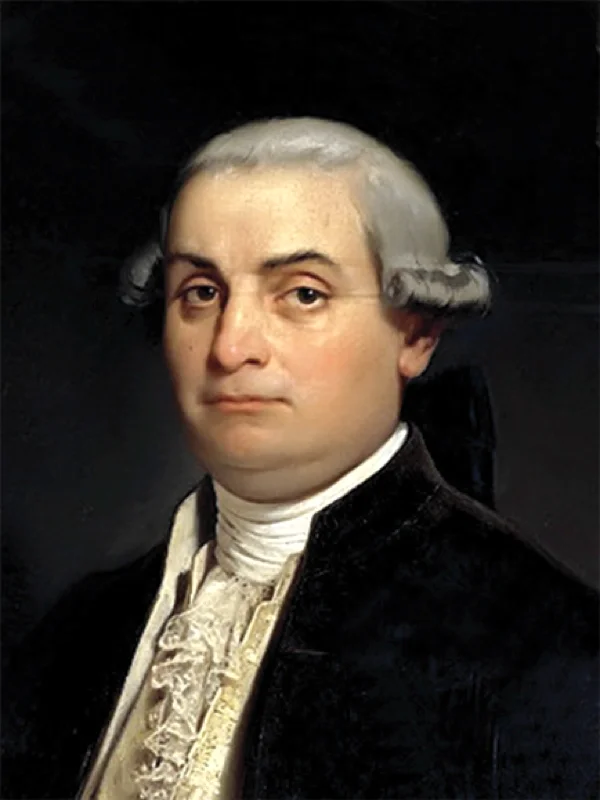
Cesare Beccaria changed the way Europe talked about crime and punishment. In his short 1764 treatise On Crimes and Punishments, the young Milanese thinker challenged torture, arbitrary justice, and the death penalty, arguing that laws should protect society through proportionate, predictable punishments rather than cruelty. The book made him an international figure and helped shape modern debates about criminal law.
Education and the Milanese circle
Born in Milan on 15 March 1738 to a noble family, Beccaria was educated at a Jesuit school in Parma and studied law at the University of Pavia, graduating in 1758. His formal training in law met the new currents of Enlightenment thought circulating through northern Italy.
In the early 1760s, he became part of a close circle of reform-minded intellectuals led by brothers Pietro and Alessandro Verri. They formed the Accademia dei Pugni, or “Academy of Fists,” and later contributed to the journal Il Caffè. The group discussed economics, politics, education, and legal reform, challenging traditions they saw as irrational or harmful. Beccaria married Teresa Blasco in 1761, against his father’s wishes, and the couple initially faced financial difficulty.
A radical book on punishment
Beccaria’s most famous work, Dei delitti e delle pene, appeared anonymously in 1764. He argued that criminal law should be clear and publicly known, that punishments should be proportionate to the harm caused, and that swift, certain penalties deter crime more effectively than extreme ones applied unpredictably. He opposed torture, pointing out that it could punish the innocent and reward the physically resilient rather than reveal truth.
His attack on capital punishment was among the most striking parts of the treatise. Beccaria argued that the state had no right to take a life as routine punishment and that execution did little to prevent crime compared with a consistent system of proportionate penalties. He allowed narrow exceptions in circumstances of extreme public danger, but his broad case for abolition became a rallying point for reformers.
The book spread rapidly across Europe. It was translated into French and English, praised by Voltaire, and read by legal and political thinkers including Jeremy Bentham. Its publication also brought controversy: a cleric’s attack accused Beccaria of undermining religion and sovereign authority, and the Catholic Church placed the work on its Index of Forbidden Books in 1766. The backlash unsettled the author, who preferred quiet reflection to public polemics, while the Verri brothers defended the book and its arguments.
Scholar and public official
Beccaria traveled to Paris in 1766, where leading Enlightenment writers welcomed him. The trip was emotionally difficult, however, and he returned to Milan after only a short stay. His influence continued to grow through his writing and public work. In 1768, he became professor of political economy at Milan’s Palatine Schools, among the earliest holders of such a chair. He later served in the Austrian administration of Lombardy, contributing to economic and administrative reforms.
The reform of criminal law in Tuscany under Grand Duke Peter Leopold, which abolished capital punishment in 1786, reflected ideas Beccaria had helped bring into public debate. His writings also influenced discussions of due process, the limits of state power, and the purpose of punishment across Europe and the Atlantic world.
Later years and legacy
After Teresa’s death, Beccaria remarried Anna Barbò. He continued to work in public administration, but did not produce another book with the reach of On Crimes and Punishments. His lectures on political economy were published after his death. He died in Milan on 28 November 1794.
Beccaria’s importance rests not on a single policy proposal but on a new standard for judging criminal law: punishment should be governed by public rules, proportion, and prevention, not vengeance or spectacle. His work remains a landmark in the history of criminology and penal reform, and its questions about state power and human dignity are still debated.