Gaius Cassius Longinus
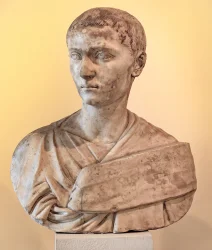
Gaius Cassius Longinus was a Roman senator, military commander, and the most determined organizer of the conspiracy that killed Julius Caesar. His career crossed the republic’s civil wars: he fought first against Caesar, accepted the dictator’s pardon, and later turned against him in the name of restoring the old political order. The assassination did not bring that order back; it opened a new struggle for power.
Soldier and senator
Cassius was born around 86 BCE into a prominent Roman family. In 53 BCE he served as quaestor to Marcus Licinius Crassus during the disastrous campaign against Parthia. After Crassus’s defeat and death at Carrhae, Cassius helped lead the surviving Roman forces back to Syria. He later defended the province against Parthian attacks and built a reputation as an effective commander.
During the civil war between Caesar and Pompey, Cassius backed Pompey and commanded a fleet. After Pompey’s defeat at Pharsalus in 48 BCE, Cassius surrendered and received Caesar’s pardon. He returned to Roman political life and was appointed praetor for 44 BCE. Yet Caesar’s concentration of power, and the competition for influence among senators, continued to fuel opposition.
The Ides of March
Cassius became the central organizer of a conspiracy against Caesar, recruiting fellow senators and helping bring Marcus Junius Brutus into the plot. Ancient writers describe varied motives: hostility to one-man rule, concern for the republic, personal ambition, and resentment at Caesar’s favors and appointments. Cassius’s own intentions cannot be reduced to a single cause.
On 15 March 44 BCE, the conspirators attacked Caesar during a Senate meeting in the Theatre of Pompey. Cassius participated in the killing. The plotters called themselves liberators, but they had no settled plan for what would follow. Public reaction was uncertain, and Caesar’s supporters soon regained the advantage. Cassius and Brutus left Italy and assembled forces in the eastern provinces.
Philippi and the end
Cassius raised money and troops in Syria and Asia Minor, while Brutus gathered support elsewhere in the East. Their armies met the forces of Mark Antony and Octavian at Philippi in Macedonia in 42 BCE. In the first battle, Cassius’s camp was captured. Believing the entire cause had been lost, he ordered his freedman Pindarus to kill him. In fact, Brutus had won on the other side of the battlefield. Brutus later died by suicide after a second defeat.
Cassius’s death ended a career shaped by both military skill and political upheaval. His role in Caesar’s assassination made him a lasting symbol of resistance to dictatorship, but the conspiracy failed to restore the republic. Instead, Rome moved toward rule by emperors, the very outcome the “liberators” had sought to prevent.