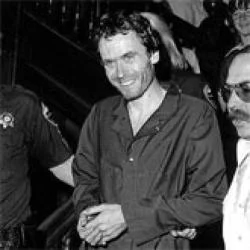
John B. Watson
John B. Watson helped make behaviorism one of the most influential approaches in twentieth-century psychology. He argued that psychology should study observable behavior through controlled experiments, rather than rely on introspection about private mental states. His bold program changed the field, though both his methods and his sweeping claims remain controversial.
Making behavior observable
Born in South Carolina on 9 January 1878, Watson studied at Furman University and the University of Chicago, where he trained in psychology and animal behavior. In 1908, he joined Johns Hopkins University in Baltimore, eventually becoming chair of its psychology department.
In 1913, Watson published “Psychology as the Behaviorist Views It,” a paper often called the behaviorist manifesto. He urged psychologists to build a natural science focused on what could be observed and measured. He believed many principles of learning applied across species, making animal experiments useful for understanding human behavior. Watson’s forceful advocacy helped move psychology toward experimentation, although behaviorist ideas had roots in earlier work and his proposal did not win immediate universal acceptance.
The Little Albert study
Watson’s best-known experiment was conducted with his graduate student Rosalie Rayner in 1919 and 1920. They paired a white rat with a startling noise for an infant identified in their report as “Albert B.” The child later showed fear toward the rat and some similar furry objects. The study became a famous demonstration of conditioned fear, but it involved a single infant, had significant methodological limits, and raised serious ethical concerns. Researchers have also debated the child’s identity and what happened to him afterward; the historical record does not establish that his fear was successfully removed.
Watson’s academic career ended abruptly in 1920, after a widely publicized divorce and personal scandal involving Rayner. The precise circumstances of his departure have been debated, but he resigned from Johns Hopkins and did not return to university teaching.
A second career and a lasting debate
Watson moved into advertising, first working at J. Walter Thompson and later at other firms. He applied ideas about habit, emotion, and learned responses to marketing, helping shift advertising toward appeals based on consumers’ feelings and associations as well as product claims. He also wrote popular books on behavior and child-rearing, often making claims about how strongly environment could shape personality.
Watson died in 1958. His legacy is double-edged: he helped establish psychology as an experimental discipline centered on behavior, while his confidence in conditioning sometimes outran the evidence. The Little Albert study, in particular, remains a landmark less for providing a definitive answer than for prompting questions about research ethics, reproducibility, and how much can be concluded from a single case.