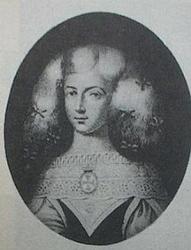
Galina Kuznetsova
 Russia
Poetess, the Love of Bunin
Galina Kuznetsova was born on December 10, 1900, in Kiev, in a culturally rich noble family. Her childhood was spent in the suburbs of Kiev, on Pechersk, in a house number three in the Esplanadny Lane. Later, she and her mother and stepfather moved to Levandovskaia Street with its huge spreading chestnut trees. From childhood, Galina passionately loved their shade and aroma. She believed that the chestnuts in Paris smelled completely different. And their candles weren't as straight.
In 1918, in Kiev, she graduated from the Platonov Women's Gymnasium, receiving a classical education. She got married quite early due to difficult relationships in the family, which she barely mentions in her autobiographical novel "Prologue" and diaries.
Already in the early autumn of 1920, Galina left Russia with her husband, Dmitry Petrov, a white officer and lawyer, sailing to Constantinople on one of the ships filled with a motley crowd of people who were desperate and hopeless, leaving their homeland torn apart by the bloody innovations of the October Revolution.
At first, the Kuznetsovs settled in Prague, where they lived in a dormitory for young emigrants called "Svobodarne," but then, due to Galina's weak health, in 1924, they moved to France. In Prague, Galina became a student at the French Institute, and her first literary attempts began to appear in newspapers and magazines.
Her "literary legacy" was scattered in small fragments throughout these emigrant publications: "Novoe Vremya," "Posev," "Zveno," "Sovremennye Zapiski."
All this was invariably met with friendly reviews from editors and critics, but something in her stories, sketches, novellas - watercolor-cold, transparent, always with a somewhat stretched plot ("Oles," "Blue Mountains," and many others) - exuded a chill: faceless, unmemorable. There were no sparks of soul, flames of the heart in everything she wrote.
Only the exquisitely pale reflection of something unfelt, not understood. And she herself, I'm afraid, always and in everything was just a reflection. Let me explain my thoughts.
Galina had a highly developed empathy. Psychologists clearly and strictly define this trait of a person as the ability to experience and play in one's own life only other people's emotions. Not one's own, alas! One's own emotions are often deeply hidden. And do they even exist? Not having one's own strong inner life, living and feeling only "other," all this is a feature of soft, plastic individuals who easily succumb to the will of others.
And a strong foreign will feels quite comfortable reflecting in these "human mirrors," don't you agree? They are the ones she needs, perhaps... Only them. That's how people are.
This strange, "absorbing" nature greatly affected Galina Kuznetsova's creativity. Her style of writing.
Among the "acmeistic-transparent" lines of her poems and diary entries, I found a very remarkable episode:
"December 11, 1927.
...I feel mediocre. My head is working hastily and chaotically. However, I try to work. Yesterday I took a postcard with the head of Madonna and started describing it in verses. Here's what came out:
In a light cap, bowing her head,
She looks with submissive eyes
Downward. Behind her narrow shoulders
An empty distance and the slopes of dark fields,
And the serrated crest of the city wall,
Darkening on the bright blue sky,
She looks with childlike lips pursed,
And a thin circle shines above her in the sky..."
At first glance, nothing strange... Lovely poetic lines. Perfect rhymes, perfect description. Yes, it's all true. But the point is that it's just a description, without the slightest hint of any personal, passionate, sincere impressions and feelings. It's not experienced, not deep. Just a cold, calm glide of gaze. Kuznetsova has many such poems. They were highly valued by Vyacheslav Ivanov, Georgy Adamovich, M. Basilii, but the cold-refined lines didn't touch the depths of the soul and were not memorable because, as M. Dukhanina rightly noted - a contemporary critic and researcher of Kuznetsova's legacy - "In Kuznetsova's poetry, undoubtedly, there is mysticism, contemplation. She always thought in complex, abstract images and symbols, capturing some 'beautiful moments' that are decisive for her in life.
Her feelings are vague, not fully conscious, permeated with signs not of this world, 'seraphic.' In her collection "Olive Garden" (1937), for example, there are almost no poems about love; in general, there are few manifestations not only of passions but also of ordinary, quite female joys and sorrows. For her, it is valuable 'opening everywhere of mysterious cherished signs... what? She didn't know, she only knew that it was in them that there was beauty and meaning for her, without which everything else was unnecessary and dull," - that's how Kuznetsova described herself in her autobiographical story "Artist." (* M. Dukhanina. "Monastery of Muse." Author's personal web collection of the essay.)
And it was into this vagueness of feelings, sensations, longings, desires, into an orderly and somewhat boring life of a fairly well-off mature woman, silently loved by her husband* (* At the time of parting with Dmitry Petrov, Galina Nikolaevna was already about 33 years old! - author.) that a blinding lightning bolt in the form of Ivan Alexeevich Bunin suddenly burst.