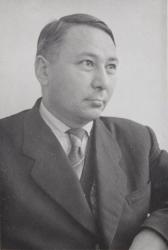
Gaspar Bekes
 Lithuania
- Caspar Bekes: A Hungarian Noble in the Lithuanian Service
- Early Life and Career in Hungary
- Alliance with the Habsburgs and Rivalry with Bathory
- Alliance with Poland-Lithuania
- Religious Controversy and Legacy
Caspar Bekes: A Hungarian Noble in the Lithuanian Service
Caspar Bekes was a prominent Hungarian noble who found his calling in the Grand Duchy of Lithuania. He was a close associate and military commander under King Stephen Bathory.
Early Life and Career in Hungary
Bekes came from an ancient Hungarian family. His father, Laszlo, served as vice-ban of Lugos and Nyitra, earning the nickname "Bekes" after his ancestral estate. In 1557, Bekes entered the service of King John Sigismund Zápolya of Hungary, where he rose to the ranks of treasurer and trusted advisor. In 1565, he led an embassy to Istanbul, seeking support from Sultan Suleiman I against Emperor Maximilian II.
Alliance with the Habsburgs and Rivalry with Bathory
In the late 1560s, Bekes shifted his loyalty to the Habsburgs in their bid to control Transylvania. However, after Stephen Bathory's election as Prince of Transylvania in 1571, Bekes opposed him, hoping to seize power for himself. His forces were defeated in 1575, leading to the confiscation of his lands.
Alliance with Poland-Lithuania
When Bathory was elected King of Poland and Grand Duke of Lithuania in 1576, Bekes reconciled with him and settled in the Polish-Lithuanian Commonwealth in 1577. He commanded Hungarian infantry and distinguished himself through his bravery and military skills, notably in the defense of Elbląg in 1577 and the Polotsk campaign in 1579.
Religious Controversy and Legacy
Bekes embraced Anti-Trinitarian beliefs, attracting supporters. After his death, he was denied burial in Christian cemeteries and was laid to rest on the Bald Mountain in Vilnius. This mountain became known as Bekes Hill, where a memorial tower was erected over his grave. However, the tower collapsed in 1838.
Scholars initially assumed Bekes was an atheist, but research has since revealed that he was an Arian. According to letters from the papal nuncio, he may have even converted to Catholicism shortly before his death. Bekes is also credited with introducing the bekecsa, a Hungarian wool-lined coat that became popular in Poland-Lithuania.