Gaspard Tournachon (Nadar)
 France
- Gaspar-Felix Tournachon (Nadar): A Legend in His Time
- The Birth of Nadar
- A Career in Photography
- Fame and Success
- Aviation and Military Contributions
- Nadar: A Legacy in Photography and Aviation
Gaspar-Felix Tournachon (Nadar): A Legend in His Time
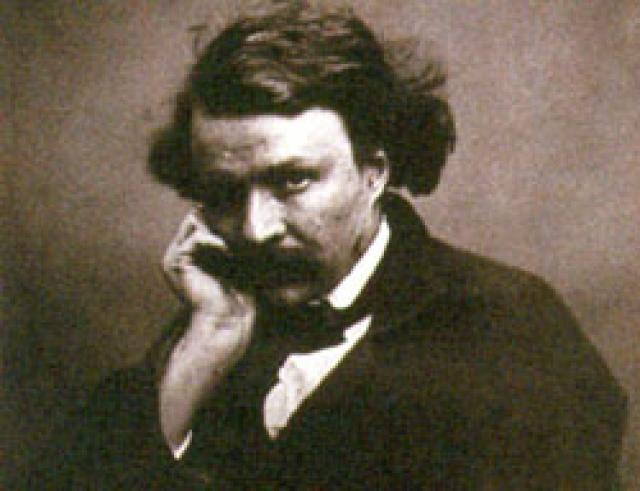
Early Life and CareerGaspar-Felix Tournachon, known as Nadar, was a French photographer, caricaturist, balloonist, and journalist. Born on April 5, 1820, in Paris, he became a legend in his own lifetime. Nadar was the greatest photographer of the 19th century, as well as a writer, journalist, artist, caricaturist, traveler, and pioneer of military aviation reconnaissance even before the invention of aviation. Despite the fact that his name may not be well-known, many of our compatriots who grew up reading Jules Verne's novels will recognize his character. In two of Verne's novels, "From the Earth to the Moon" and "Around the Moon," the great novelist introduced a single Frenchman, journalist Michel Ardan (an anagram of Nadar's name), into the American expedition. He left literary portraits of his hero, which were essentially accurate representations: "He was a man of about forty-two years old, tall, but slightly hunched, like the caryatids supporting balconies on their shoulders. His large lion's head was adorned with a shock of fiery hair, which he would sometimes shake like a mane. His round face, wide cheekbones, protruding bristly mustache, and tufts of reddish hair on his cheeks, round, short-sighted, and slightly wandering eyes gave him the appearance of a cat. But his nose had a bold line, his lips had a kind expression, and his high, intelligent forehead was furrowed with wrinkles, like a field that never rests. Finally, his well-developed torso, firmly placed on long legs, muscular agile hands, and resolute gait all proved that this European was a strapping fellow, whom, to use the language of metallurgists, nature "forged rather than cast." Jules Verne was a close friend of Nadar, sharing many of his political views, and, like him, was convinced that only the power of reason could lead humanity to a bright future. Moreover, Nadar was a role model for the writer, a personality capable of asserting the power of Man over Nature with the strength of his character and the audacity of his ventures.
The Birth of Nadar
Nadar was born on April 5, 1820, in Paris, and he was a true Parisian in spirit. His parents were originally from Lyon, where his father owned a small publishing house that printed books and journals of a radical nature. At the end of the summer of 1838, after completing his studies at the Versailles lyceum, Gaspar-Felix enrolled in the medical institute in Lyon. However, later that year, the publishing house went bankrupt, and his father, unable to cope with the collapse of his beloved creation, died suddenly. Gaspar-Felix and his younger brother Adrian were left in the care of their mother, Ernestine Tournachon. The meager inheritance was barely enough to make ends meet, so Gaspar-Felix had to give up not only his studies but also the idea of becoming a doctor and focus on supporting the family. As he was skilled at drawing, he initially decided to publish small articles accompanied by his own caricatures in Lyon newspapers. However, the fees he received as a young, energetic, and ambitious boy were not enough to sustain a living. Therefore, he had to try his hand at various professions, which were not really professions. In his memoirs, written 60 years later, Nadar listed them: poacher, smuggler, peat seller, minor clerk, secretary. During this period, he also made occasional trips to Paris, partly for work, but mostly driven by his youthful ambition to conquer the capital of the world. In March 1842, Nadar met the young Baudelaire, and they became close friends, constantly revolving in the circle of the Parisian bohemians, making a living - one with journalism and caricatures, the other with journalism and poems (later becoming the basis for his collection "Flowers of Evil"). It was during this time when Nadar finally moved to Paris, published caricatures in various magazines and newspapers.
A Career in Photography
In 1848, a wave of revolutions swept across many European countries, driven by the desire for democratic reforms. In countries like Hungary and Poland, they had a national-liberation character. As a republican by conviction, Nadar joined the newly formed Polish Legion in Paris, a unit made up of Polish exiles and sympathetic Frenchmen. However, the Legion, which was supposed to march to Poland through Germany, was stopped by the Prussian government, which did not want to strain its relations with Russia. The entire Legion, including Nadar, was sent back to Paris. Nevertheless, Nadar preserved his sympathy for the Poles throughout his life. In the future, he even organized firework displays in their honor at bohemian parties. In the same year, the revolution broke out in France. Nadar, like most citizens, fought with weapons in hand on the barricades against government forces. In the end, the revolution was victorious, and the people elected Napoleon III, the nephew of Napoleon Bonaparte, as President of the Republic, eventually becoming Emperor Napoleon III. In this situation, Nadar shared the sentiments of the majority, openly despising Louis Napoleon, although the latter treated him with great respect.
Soon after the end of the revolution, Nadar started his own journal called "Comical Review." It was during this time that he became interested in photography, which was quite unusual for that time. When Nadar became interested in photography, the invention of Daguerre and Niepce was only 10 years old. Since its inception, photography had been fiercely criticized, not only by the official church but also by artists. It threatened the livelihood of many miniature painters who had previously thrived, and as a result, many had to retrain as photographers. It should be noted that this occupation proved to be quite lucrative: the first photographs cost a staggering amount of money for those times - 25 gold francs per plate, which interested Nadar, who initially approached photography without much respect, but rather with understandable hostility. For the past 10 years, photography had been the subject of constant debate: was it art, and if so, did painting still have a purpose? After all, any person or landscape, although not in color, could now be captured on iodized silver plates covered with a photosensitive layer.
In 1853, Nadar "infected" his younger brother, Adrian, with photography. After giving him several photography lessons and making him his full-fledged partner, Nadar opened a photography studio on Rue Saint-Lazare. At the same time, he also had his own studio. However, their relationship soured due to Adrian's unexpectedly pragmatic attitude, which Nadar did not expect from his beloved brother. Adrian demanded the right to sign his own photographs with Nadar's name. It should be noted that by that time, the name Nadar was no less significant than, for example, "Veuve Clicquot." Outraged by his brother's claims, Nadar initiated a lawsuit, which resulted in all rights to photographic works being established in his name. Adrian received the old studio, while Nadar opened a new photo salon in a large building on Boulevard des Capucines, 35, painting his studio in a monstrously bright red color and placing a huge sign "NADAR" on the 15-meter facade of the building.
Fame and Success
Nadar's gallery of portraits of famous people brought him fame. In terms of the number of types represented, it was second only to the characters of Balzac's "La Comédie Humaine." Among them were exotic personalities as well. For example, the Siamese ambassador agreed to be photographed by Nadar, but only after making a solemn promise that the photograph would be accompanied by a note stating that the ambassador actually had two eyes. The portraits of the master primarily reflected the people in his circle, namely writers and artists: George Sand, Eugene Delacroix, both Dumas, Berlioz, Rossini, Verdi, and many, many others. He managed to astonish his contemporaries with the publication (long before the invention of cinema) of a close-up of composer Charles Gounod's eyes, which was titled "Eyes of Charles Gounod." This fact was a manifestation of rare audacity for those times, equivalent to photographing his severed head. Interestingly, 50 years later, when close-ups of heads appeared on movie screens for the first time, the audience stomped their feet, jumped up, whistled, and shouted, "Show us the legs!"
Continuing to astonish the public, Nadar captured a female portrait (Marie Laurent) from behind, allowing people to understand that the cornerstone of photography is the person behind the camera. Thus, he anticipated the emergence of a completely new psychology - the psychology of cinema, in which the operator's point of view is fundamental.
Nadar's models included scientists like Louis Pasteur, Ilya Mechnikov, and Jean-Henri Fabre, as well as politicians ranging from Emperor Napoleon III and Alexander III to anarchist revolutionaries Mikhail Bakunin, Peter Kropotkin, and Pierre-Joseph Proudhon. He rarely photographed actresses, considering them shallow characters. Nonetheless, he took some of the best portraits of the young Sarah Bernhardt. For the same reason, he avoided photographing soldiers.
Most notably, Nadar shocked his contemporaries when he descended into the Parisian catacombs with his camera in 1861, capturing horrifying scenes of scattered human bones and skulls.
Aviation and Military Contributions
Nadar's curiosity was not limited to the depths of the earth. He was equally drawn to the sky. After studying with the famous balloonists, the Godard brothers, he created the colossal giant balloon "Géant" with his own means. In 1855, he patented the idea of photographing the earth's surface from a balloon for cartographic and observation purposes. A year later, he took his first aerial photographs of Paris from a height of 80 meters. Initially, they were unsuccessful, as the gas escaping from the envelope caused significant damage to the collodion coating of the plates. Nadar had to develop the plates right there, in a specially equipped booth inside the basket of the balloon. In the end, he managed to capture remarkable bird's-eye views of the French capital. This caused a real frenzy among painters, who were eager to capture Paris from elevated positions and from the balconies of its buildings. In any case, Claude Monet's world-famous painting "Boulevard des Capucines" was painted by the artist on the balcony of Nadar's studio.
On July 30, 1863, in Paris, Nadar presented his "Manifesto of Dynamic Aviation," proclaiming not only the possibility but also the necessity of human-controlled flight, as opposed to the previously practiced flight that entirely depended on weather conditions and wind direction. For the first time in the world, the idea of purposeful flight, subject to the power and will of man, was made public. Translated into many European languages, including Russian, and published in various newspapers and magazines, the Manifesto sparked increased interest in aviation. It was under its influence that, in October of the same year, inventor A.V. Ewald published an article in St. Petersburg entitled "Aviation," which outlined the basic principles of aircraft design.
Nadar's headquarters for the "Society for the Support of Air Travel on Heavier-than-Air Machines" was located at 35 Boulevard des Capucines. He served as the president, with Jules Verne as the secretary. They were not mere figureheads - Nadar made several daring flights to Brussels, Lyon, and other cities in France on his "Géant."
When Prussian forces surrounded Paris, marking the beginning of the siege, Nadar, at the head of a special brigade of aeronauts, proposed the idea of aerial reconnaissance, which could be used for military purposes. In less than a week, he prepared and launched the airship "Neptune" into the sky, providing reconnaissance of enemy troops at an unreachable height for Prussian rifles. During the 131 days of the siege, 55 balloons were launched from Paris, flying over the heads of the enemy and landing in safe places. They carried passengers, mail, and carrier pigeons. The positions of the Prussians were photographed from a bird's-eye view on thin collodion film, which was then rolled up into a small tube and attached to the tail of a pigeon. When the birds arrived in Paris, the film was placed between two pieces of magnifying glass and projected onto a screen.
Throughout the siege, Nadar and his "airborne helpers" provided valuable intelligence, contributing to the city's survival. In addition to military reconnaissance, they transported provisions and maintained essential communication with the outside world.
Nadar: A Legacy in Photography and Aviation
Throughout his life, Nadar remained a tireless adventurer and innovator. After the siege of Paris, he continued his photography career and pursued further endeavors in aviation. His legacy as a photographer, journalist, and aviation pioneer has left an indelible mark on history. Nadar's contributions to the fields of photography and aviation continue to inspire and influence future generations.