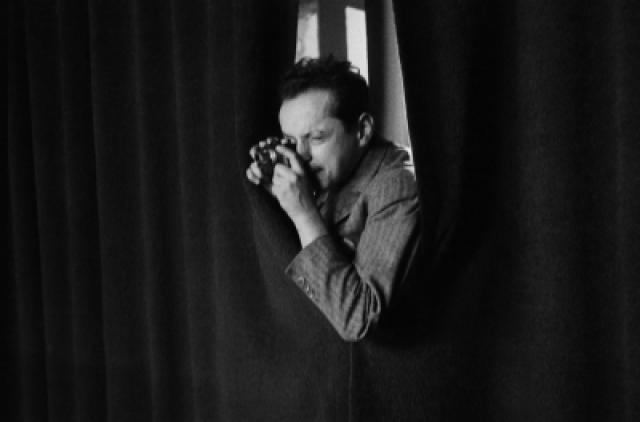
Lucien Aigner
 Hungary
- Biography of Lucien Aigner
- Early Career
- Move to the United States
- Voice of America and Later Life
- Rediscovery and Legacy
Biography of Lucien Aigner
Lucien Aigner was born in 1901 in Hungary. At the age of 9, he received his first camera and began taking photographs of his family and friends. Over time, Aigner delved deeper into photography and in 1926, at the age of 25, he started working as a photojournalist for the Hungarian publication 'Az Est'. It was during this time that Aigner began using the 'Leica' camera.
Early Career
In the late 1920s, Aigner moved to France and within 10 years, he became one of the most renowned photographers in the country. Notably, his most famous photograph was taken in 1935 during the Stresa Conference, where he captured Benito Mussolini about to sneeze. The photograph was later featured in 'Newsweek', bringing Aigner recognition.
Move to the United States
In the early 1940s, Aigner had to relocate to the United States due to the fear of Nazi persecution. He continued to photograph, and his most notable subjects were Albert Einstein, whom he photographed at Princeton University. One of his photographs, showing Einstein standing at a chalkboard during a lecture, became his favorite.
Voice of America and Later Life
In the late 1940s, Aigner began working for the radio station 'Voice of America' and quickly rose from a simple announcer to a manager. However, during the McCarthy era, he had to leave the radio and return to photography. In the late 1950s, Aigner divorced his wife, leaving him with two sons while his two daughters remained with their mother. He then moved to Great Barrington, Massachusetts, where he opened a portrait studio and remained there for the next two decades.
Rediscovery and Legacy
In 1970, Aigner made a significant discovery when he found his old negatives from the 1930s, which he had thought were lost forever. This collection included around 100,000 negatives and prints. From the late 1970s onwards, Aigner stopped working in the studio and focused on organizing his creative legacy. He passed away on March 29, 1999, at the age of 97, leaving behind a rich photographic heritage.


