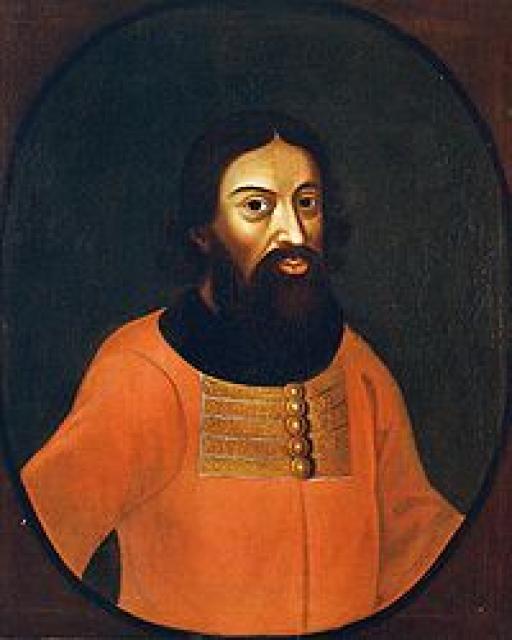
Gavrila Fetiev
 Russia
- Humble Beginnings and Early Life
- Entrepreneur and Patron
- Customs Head and Business Tycoon
- Real Estate Mogul
- Imperial Favor and Privilege
- Land Acquisition and Rural Expansion
- Legacy and Fortune
Gavrilo Martynov Fetiev, the Premier Merchant of Vologda in the 17th Century
Humble Beginnings and Early Life
Gavrilo Martynov Fetiev, one of the most prominent merchants in Vologda during the 17th century, hailed from humble origins. His grandfather and father were ordinary blacksmiths, with the latter briefly documented as a vagrant pauper. However, Fetiev's father, Martynko, managed to rise to a full-fledged townsman. By 1646, he owned a house with four sons: Gavrilo, Yakov, Stepan, and Semen. This marked the first written record of the future merchant.
Entrepreneur and Patron
Already by 1652, Fetiev had established himself as an independent individual. He assisted in the construction of a new church in Vologda and secured contracts for trading government-owned grain and potash. His business ventures soon expanded, and he owned several barges, employing between 90 and 130 workers. Fetiev's influence and wealth continued to grow, and he played a significant role in local affairs, such as the construction of a new church to combat the plague.
Customs Head and Business Tycoon
Fetiev's entrepreneurial spirit extended beyond trade. He served as the head of Vologda's customs service, facilitating partnerships with foreign merchants, religious institutions, and townsfolk in need. Fetiev also became a prominent creditor, lending to both individuals and organizations. His influence reached the highest levels of the land, as he played a leading role in signing the New Trade Charter of 1677.
Real Estate Mogul
Fetiev acquired vast amounts of real estate in Vologda, including shops, houses, and gardens. He often lent money to residents, securing his loans with property. However, Fetiev's ambition and wealth made him a target of resentment. His own brothers distanced themselves from him due to his "pride." By 1678, Fetiev possessed 28 properties owned by townspeople and vagrants who had fallen into debt.
Imperial Favor and Privilege
In the late 1670s, Fetiev achieved the prestigious rank of "guest," a designation reserved for influential merchants who served the government financially. This status granted him exclusive rights and the use of a personal seal. Fetiev's rise coincided with his connections to high-ranking officials in Moscow, including Vasily Golitsyn and Artemy Matveev. However, his association with Matveev brought him into the crosshairs of a political intrigue, and Fetiev faced interrogation under duress.
Land Acquisition and Rural Expansion
In his later years, Fetiev began investing in land and property outside Vologda. He purchased abandoned lands and resettled them with peasants, aiming to create a self-sufficient agricultural enterprise. His vast gardens and cultivation of vegetables indicate a commercial focus in this aspect of his business.
Legacy and Fortune
Upon his death, Fetiev's monetary wealth was estimated at approximately 17,000 rubles, equivalent to 289,000 rubles in the late 19th century. His debts were owed by prominent merchants, nobles, and traders from various cities, reflecting the vast reach of his business operations. Gavrilo Martynov Fetiev's legacy as one of the most successful merchants in 17th-century Vologda continues to be remembered today.


