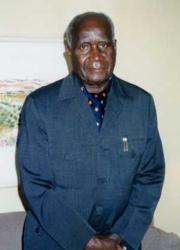
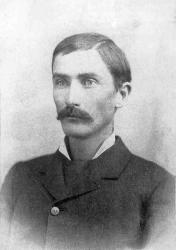
Geil Norton
 USA
USABiography of Gale Norton
Gale Norton, the current US Secretary of the Interior, has a political background that raises questions about her libertarian views. Born in 1954 in Wichita, Kansas, Norton grew up in a Republican family that was receptive to both liberal and conservative speeches by Barry Goldwater. She was particularly influenced by Goldwater's defense of individual freedom. Norton began studying law at the University of Denver in the early 1970s, where she crossed paths with Condoleezza Rice. During the Vietnam War, she actively participated in numerous peace demonstrations and later joined the ranks of the ultraright ideology.
In the late 1970s, Norton became involved with the Libertarian Party and even led the presidential campaign of candidate Ed Clark in Colorado in 1979-1980. Clark's platform advocated the dismantling of institutions such as the Department of Energy, FBI, and CIA. Norton wrote speeches for Clark, who supported the legalization of marijuana and an end to censorship of pornography. On foreign policy, Clark called for the withdrawal of all US soldiers deployed worldwide. Norton's involvement in Clark's campaign gained support from industrial magnates such as Carl Koch, whose father Fred Koch was a prominent sponsor of anti-union movements and a member of the John Birch Society. The Cato Institute, also funded by Carl Koch, also supported the Libertarians. Clark's campaign garnered a record one million votes for a third-party candidate.
After Clark's campaign, Norton joined the Mountain States Legal Foundation in Denver in 1979. This legal association, founded by Joseph Kurz, is dedicated to principles of personal freedom, private property, limited government, and free trade. Kurz had amassed his fortune by running the third-largest brewery in the country. Norton's role in the foundation involved justifying the positions of major companies on environmental issues. She argued, for example, that the government should compensate companies for preventing pollution in the interest of environmental conservation. This argument, however, had already been rejected by the Supreme Court in 1887. The conservative revolution of Ronald Reagan revived this idea, and Norton played a key role in shaping the concept through her work at the Hoover Institution and the Environmental Protection Agency.
Norton's career took a turn in 1991 when she was appointed as Colorado's Attorney General, becoming the first woman to hold the position. Despite her previous libertarian and environmentalist leanings, her policies as Attorney General were more conservative. She supported the death penalty, increased the number of juvenile detention centers, and reduced the budget for environmental issues. She often declined to prosecute companies for environmental violations, even when it involved cases of cyanide contamination. Her actions and positions as Attorney General led to her defeat in the 1996 Senate elections.
Nevertheless, Norton maintained her connections in Washington, particularly among the most conservative Republicans. In 1998, she founded the Council of Republicans for Environmental Advocacy, funded by industrial companies such as the Chlorine Chemical Council, National Coal Council, Chemical Manufacturers Association, and National Mining Association. Norton also worked as a lobbyist for the NL Industries, previously known as the National Lead Co., defending the company against lawsuits related to lead paint. She also represented Arabian company Delta Oil and BP-Amoco during unsuccessful negotiations with the Taliban regarding the reconstruction of an oil pipeline in Afghanistan.
In June 2001, Norton was appointed as the Secretary of the Interior in the Bush administration. Her main task was to avoid any actions that could hinder the activities of major industrial companies, particularly in regards to the ratification of the Kyoto Protocol. Norton's relationship with her deputy, Stephen Griles, was strained but influential in the department. She also maintained ties to the Federalist Society, which has strong connections to industry through its founder, Spencer Abraham, a former senator and the current Secretary of Energy.
Gale Norton's career reflects a shift in her ideology from libertarian and environmentalist to a more conservative and industry-friendly stance. Her actions and positions have raised concerns about her true beliefs and motivations.