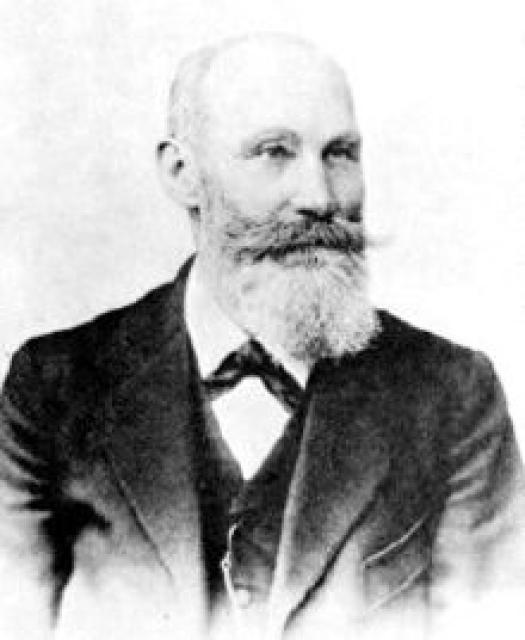
Genrih Struve
Early Life and Education
Genrikh Struve was born on January 26, 1840, in Minsk, Russian Empire. He was the son of a German father and a Polish mother. Struve studied philosophy at the University of Jena, where he earned his doctorate in 1862 for his dissertation on the origin of the soul.
Academic Career
In 1863, Struve was appointed Adjunct Professor of Philosophy at the Warsaw Main School, which later became the University of Warsaw. He held this position for the rest of his life, lecturing on various subjects within the field.
In 1870, Struve also received a doctorate in philosophy from Moscow University for his dissertation on the autonomous nature of mental phenomena. This work sparked a heated debate in the Russian literary world, with both supporters and detractors.
Philosophical System
Struve's philosophical system, known as "ideal realism" or "synthetic philosophy," aimed to reconcile the perceived contradictions between the realms of mind and matter, freedom and necessity, art and science, and church and state.
According to Struve, mind and matter were not distinct substances but rather two abstractions of an indivisible whole. He viewed God as the soul of the world, and the world as God's body. This perspective allowed him to resolve the tensions between these concepts.
Legacy
Struve made significant contributions to the field of philosophy in his time. He was one of the first to challenge the prevailing materialist tendencies of the 1860s, emphasizing the primacy of mind and the interconnectedness of all things.
Struve left behind a vast body of work, most notably in Polish and German. His writings continue to be studied and discussed by philosophers and scholars interested in his unique approach to reconciling the seemingly opposing forces of the world.


