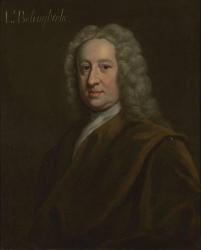
Gerhard Dorn
 Belgium
Biography of Gerhard Dorn
Gerhard Dorn was a 16th-century Belgian philosopher, translator, alchemist, physician, and bibliophile. He was one of the main supporters of Paracelsus, claiming to have found in his works the best philosophy and the most Christian way of thinking. Unlike other alchemists of his time, Dorn placed less emphasis on practical laboratory work and focused more on the theoretical study of the human mind. He criticized the scholastic education common during that period. Dorn, like many other alchemists, had a hostile attitude towards Aristotle's philosophy, which emphasized the material world. He asserted that to study the art of alchemy, one should not study Aristotle's philosophy, but rather what leads to the truth.
Early Life and Education
Information about Gerhard Dorn's early life and other historical figures of the 16th century is scarce and likely lost to researchers forever. He was born around 1530 in Mechelen, which is now part of the Antwerp Province in Belgium. Dorn studied under Adam von Bodenstein, a Swiss physician and alchemist, to whom he dedicated his first book. He started publishing his own works around 1565. On the title page of his work "Chymisticum artificium," Dorn used the "Monas Hieroglyphica," a personal glyph of another famous occultist and astrologer, the British mathematician John Dee, who was the personal consultant to Queen Elizabeth I. Alongside von Bodenstein, a follower of the legendary Paracelsus, Dorn participated in saving many manuscripts of Paracelsus and published them for the first time. He also translated many of these works into Latin for Pietro Perna, a Basel publisher, while living in Basel in the 1570s. In the early 1580s, Gerhard Dorn moved to Frankfurt, where he passed away in 1584 at the age of slightly over fifty.
Philosophical Beliefs and Works
Dorn was a strong advocate for Paracelsus, considering his works to contain the best philosophy and the most Christian way of thinking. He valued the theoretical study of the human mind more than practical laboratory work and criticized the scholastic education of his time. Like many other alchemists, Dorn had a hostile attitude towards Aristotle's philosophy, which focused on the material world. He stated that to truly study the art of alchemy, one must study what leads to the truth, rather than Aristotle's philosophy.
Dorn believed that reforms were necessary in the field of education, similar to those that occurred in religion during the Reformation and in medicine after the emergence of Paracelsus' works. He believed that universities needed a mystical and spiritual "science," which he called the philosophy of love. This radical theological theory asserted that it was God, not humans, who needed redemption. He defined the alchemical opus as the work that brought about redemption, not for humans, but for God. Dorn's innovative proposals were seen as dangerously close to heresy by Christian orthodox believers, and during that time, the Inquisition harshly punished even lesser offenses.
Dorn's major works were included in the first volume of "Theatrum Chemicum." According to Dr. Monika Wikman's book "Pregnant Darkness," alchemists like Gerhard Dorn, in his work "The Speculative Philosophy," referred to the alchemical stage of inner healing known as Unus Mundus, the Unified World, where divisions are healed, and duality disappears, and the individual, or vir unus, merges with the world soul.
Dorn's works were of great interest to psychologist Carl Jung, who cited them frequently, to the extent that he took Dorn's main works with him during his trip to India in 1928.