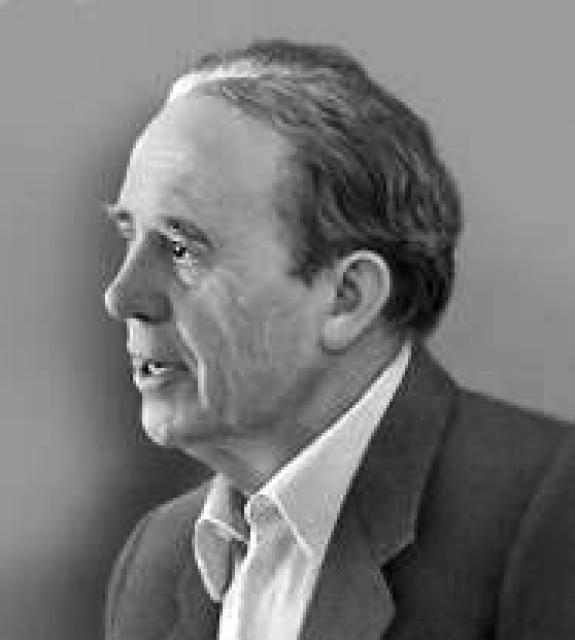
Genrih Theodor Boll
 Germany
Biography of Heinrich Theodor Böll
Heinrich Theodor Böll was a German prose writer and novelist, born in Cologne, one of the largest cities in the Rhine Valley, into a large family. His ancestors fled from England during the reign of Henry XIII due to persecution from the Anglican Church. Böll showed interest in writing from a young age and was one of the few students in his class who did not join the Hitler Youth. However, he was eventually forced into forced labor and later drafted into the military in 1939. He served as a corporal on the Eastern and Western fronts, was wounded multiple times, and ultimately became a prisoner of war in 1945. After returning to his hometown, he briefly attended the University of Cologne while working in his father's workshop and at the city's demographic statistics bureau. Throughout this time, he continued to write and published his first novella, "The Train Was on Time," in 1949, which received positive reviews. This novella was the first of many works in which Böll explored the senselessness of war and the hardships of post-war years.
Literary Career and Style
Böll's writing style was characterized by simplicity and clarity, aimed at reviving the German language after the pompous style of the Nazi regime. In his early novel, "Billiards at Half-Past Nine" (1959), he departed from the "literature of ruins" and depicted the lives of a well-known family of architects in Cologne. The novel spanned three generations, from the final years of Kaiser Wilhelm's reign to the prosperous "new" Germany of the 1950s. This novel marked a significant departure from Böll's earlier works, not only in terms of the scale of the material but also its formal complexity. The book was praised for its depiction of the healing power of human love.
In the 1960s, Böll's works became even more structurally complex. His novella, "The Clown" (1963), takes place over the course of a day and revolves around a young man who, speaking over the phone, presents his story. The protagonist chooses to play the role of a clown rather than submit to the hypocrisy of post-war society. This novel delves into the themes of Nazi past, the new political power, and the role of the Catholic Church in post-war Germany.
Böll's later works, such as "Group Portrait with Lady" (1971), were even more extensive and complex. This novel is written in the form of a report, consisting of interviews and documents about the life of Leni Pfeiffer, which reveals the destinies of sixty other people. The novel spans half a century of German history and celebrates universal human values. This novel played a significant role in Böll being awarded the Nobel Prize in Literature in 1972. The Nobel committee recognized his contributions to the revival of German literature through his wide-ranging portrayal of reality and his skillful characterization.
Throughout his career, Böll's books gained popularity not only in West Germany but also in East Germany and even in the Soviet Union, where millions of copies of his works were sold. In addition to his literary achievements, Böll played an active role in PEN International, a writers' organization, by supporting writers who faced persecution in communist regimes. He also provided temporary shelter to Alexander Solzhenitsyn, who was expelled from the Soviet Union in 1974. Böll's works continued to explore the moral imperatives and criticize the pragmatism of modern society.
Personal Life and Legacy
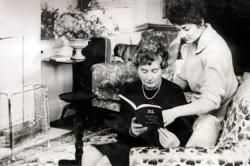
In 1942, Böll married Annemarie Cech and they had two sons together. He collaborated with his wife in translating American writers such as Bernard Malamud and J.D. Salinger into German. Böll passed away at the age of 67 while visiting one of his sons near Bonn in 1985. In the same year, his first novel, "The Train Was on Time," which was written in 1947 but unpublished, was released. Despite some critics accusing Böll of sentimentality and idealism, his works were hailed for their profound insights into the lives of ordinary people living in the colossal modern urban landscapes. Böll's contribution to German literature was recognized as he depicted the struggles faced by both his generation and individuals in the post-war era. His works continue to be regarded as significant contributions to German literature and have left a lasting impact on the literary world.