Hermann Broch
 Austria
- Early Life and Education
- Business and Philosophical Explorations
- Literary Beginnings and Philosophical Essays
- Persecution and Exile
- Conversion and Intellectual Pursuits
- Legacy and Impact
Early Life and Education
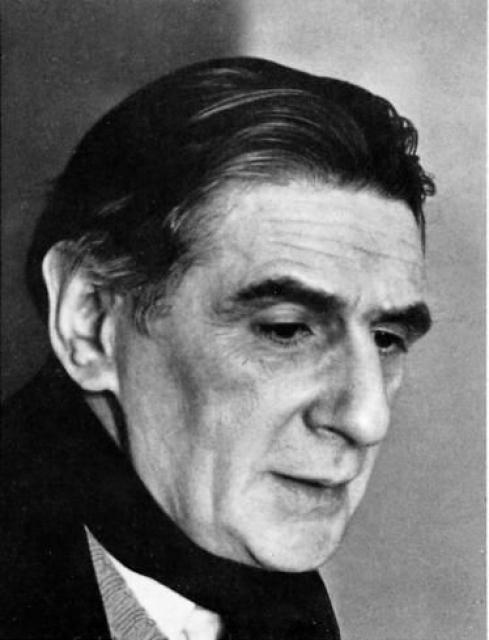
Hermann Broch was born into an affluent Jewish family in Vienna, Austria. His father was a textile manufacturer, and Broch initially pursued an engineering degree. However, his intellectual curiosity led him to audit lectures in physics, philosophy, and psychology at the University of Vienna from 1911 onwards.
Business and Philosophical Explorations
After graduating as an engineer, Broch managed his father's business from 1916 to 1927. During this period, he continued his academic pursuits, attending lectures at the University of Vienna. Following the sale of his father's factories, Broch resumed his studies in philosophy and mathematics from 1929 to 1932.
Literary Beginnings and Philosophical Essays
In the late 1920s, Broch began writing fiction alongside philosophical essays on literature and morality. His debut novel, "The Sleepwalkers," was published in 1931. Broch's philosophical writings explored the crisis of values in Austrian society during the late 19th and early 20th centuries.
Persecution and Exile
With the rise of the Nazis in Austria, Broch was arrested by the Gestapo in 1938. International protests, led by James Joyce, secured his release. Thanks to the assistance of Thomas Mann, Broch obtained a visa to the United States, where he settled in 1938.
Conversion and Intellectual Pursuits
In exile, Broch converted to Catholicism. He continued to write both fiction and philosophical works, including major treatises on mass psychology and mathematics. Broch's intellectual interests paralleled those of his Austrian contemporaries, Robert Musil and Elias Canetti, all of whom grappled with the disintegration of societal norms.
Legacy and Impact
Hermann Broch is recognized as one of the most significant Austrian writers of the 20th century. His novels, including "The Death of Virgil" and "The Guiltless," explore the themes of morality, consciousness, and the search for meaning in a chaotic world. His philosophical writings have also influenced contemporary thought on ethics and the human condition.