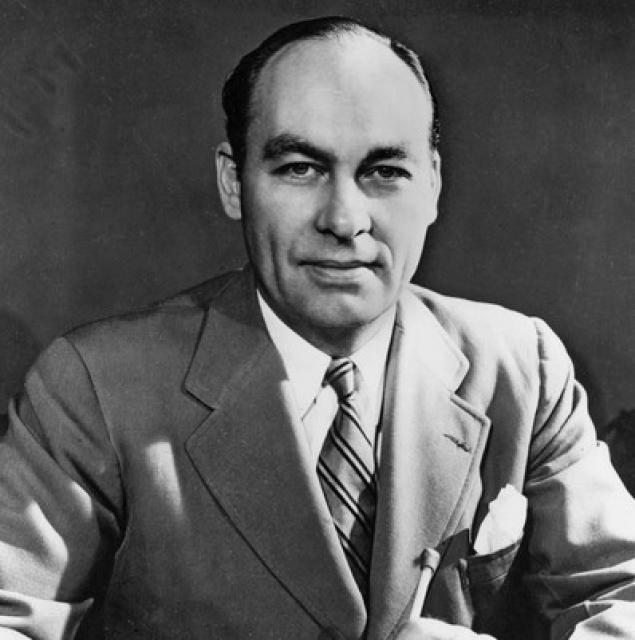
Georg Gellap
 USA
USA- Early Life and Education
- Academic Career and Research
- Founding of the American Institute of Public Opinion
- National Recognition and Influence
- International Expansion
- Legacy and Impact
Early Life and Education
George Gallup, born November 18, 1901, in Jefferson, Iowa,was known affectionately as "Ted." Facing financial constraints, he worked to finance his college education, earning a bachelor's degree in 1923. He went on to receive a master's degree in 1925 and a PhD in psychology in 1928.
Academic Career and Research
In 1932, Gallup was appointed as a journalism professor at Northwestern University in Iowa. His doctoral dissertation, "An Objective Method for Determining Reader Interest in Newspaper Content," laid the foundation for his lifelong research into political, social, and economic processes in America and later globally. Notably, he pioneered the concept of pre-distributing newspapers to respondents before questioning them.
Founding of the American Institute of Public Opinion
In 1932, Gallup relocated to New York City to lead the research department of the advertising firm Young & Rubicam. His success in predicting his mother-in-law's political victory inspired him to develop the idea of conducting national weekly polls of public opinion. Partnering with entrepreneur Harold Anderson, Gallup founded the American Institute of Public Opinion in Princeton, New Jersey, in 1935.
National Recognition and Influence
The Institute's first public opinion poll, released on October 20, 1935, gained significant media attention. Gallup's weekly column, "America Speaks," became a fixture in American newspapers. His accurate prediction of Franklin Roosevelt's re-election in 1936 brought him national renown and established the importance of political polling.
International Expansion
Beyond his focus on domestic politics, Gallup extended his research to international public opinion. In 1939, he founded the Audience Research Institute in Princeton. Post-war, Gallup played a key role in the establishment of research organizations in multiple countries. In 1947, he became the first president of Gallup International, a global network of research firms. Today, Gallup International is headquartered in Zurich and includes over 55 research organizations worldwide.
Legacy and Impact
George Gallup's contribution to public opinion research is immeasurable. His work shaped the methodologies and principles of modern polling, influenced the evolution of democratic institutions, and sparked ongoing debates about the role of polls in society.