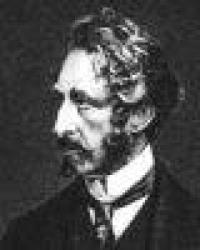
Georg Heym
 Germany
- Georg Heym
- Literary Pursuits and Influences
- Breakthrough and Posthumous Recognition
- Major Themes
- Tragic End and Literary Legacy
Georg Heym
Early Life and EducationGeorg Heym was born on October 30, 1887, in Hirschberg, Silesia, Germany. His father was a judicial official, and in 1894 the family moved to Gnesen, where his father became chief prosecutor. Heym attended high school in Gnesen from 1896 and began writing poetry as a young boy, with his earliest known poem, "Der Bach," written in 1899. In 1900, the family moved to Berlin, and Heym continued his education at the Wilmersdorf High School.
Literary Pursuits and Influences
Heym developed an interest in literature at an early age and began regularly recording his poems in a notebook from 1902. In 1905, he was forced to leave his high school after burning a school-owned boat with classmates. His father sent him to another gymnasium in Neuruppin, near Berlin. In 1906, two of Heym's poems, inspired by the suicide of his classmate Ernst Vogel, were published in the school newspaper.
Breakthrough and Posthumous Recognition
Heym graduated from high school in 1907 and entered the University of Würzburg to study law at his father's request. However, his literary ambitions continued, and on September 22, 1907, he completed the first act of his drama "The March on Sicily." The play, along with the dramatic fragment "The Gates of Athens," was published separately in 1907. On April 2, 1908, he wrote the one-act drama "The Marriage of Bartolomeo Ruggieri."
Heym's literary style was influenced by Nietzsche, Hölderlin, Novalis, and Merezhovsky. He became known in literary circles after performing at the "Neopathetic Cabaret" in Berlin in 1910. Together with Ernst Stadler and Georg Trakl, he became a precursor of the Expressionist movement in German literature.
Major Themes
Heym's poetry often explored themes of death, war, and the metropolis. He also wrote poems inspired by historical events, including the French Revolution and Greek antiquity. Among his notable works are the poem "Cyprida," the cycle of poems "Marathon," and the plays "Robespierre" and "Louis Capet."
Tragic End and Literary Legacy
Heym drowned while skating with his friend Ernst Balcke on the Havel River on January 11, 1912. His death was seen as a fulfillment of a prophecy he had recorded in his diary two years earlier.
During his lifetime, only one collection of Heym's poems, "The Eternal Day," was published in 1911. Two posthumous collections, "Umbra Vitae" (1912) and "The Heavenly Tragedy" (1922), were published in haste by his friends, resulting in numerous errors. A collection of stories, "The Thief," was also published posthumously in 1912.
Heym's posthumous fame grew after his poems were included in the renowned Expressionist anthology "Twilight of Humanity" (1919), which became a benchmark for the movement in Germany and has been reprinted over 40 times.