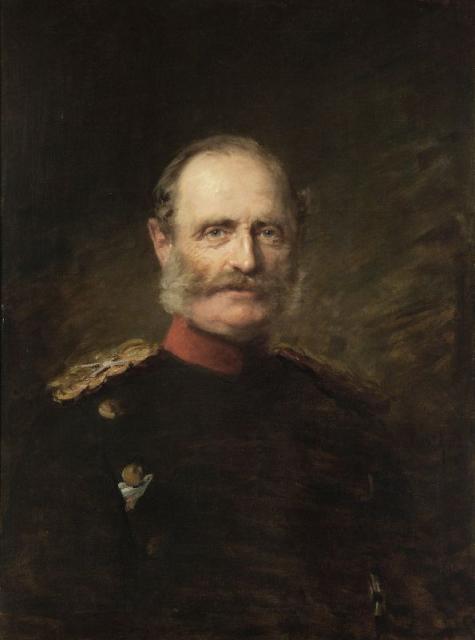
Georg I
 Germany
Biography of Georg I
Georg I was the King of Saxony from June 19, 1902. He was a Prussian and Saxon general field marshal. He belonged to the Wettin dynasty. On February 1, 1908, an open carriage carrying the Royal family was attacked by two assassins in Lisbon. King Georg I and his eldest son, Luís Filipe, were killed, while his wife, Queen Amélia, and their youngest son, Manuel, managed to escape. This made Georg I the first Portuguese King to die a violent death since Sebastian I in the 16th century.
Georg I was born on September 28, 1863, in Lisbon, to King Luís I of Portugal and his wife, Maria Pia of Savoy, the daughter of the first king of a united Italy, Victor Emmanuel II. His paternal cousins included future European monarchs such as King Frederick Augustus III of Saxony, King Ferdinand I of Romania, and German Kaiser Wilhelm II. On his maternal side, he was related to King Victor Emmanuel III of Italy. Georg also had two younger brothers: Afonso, Duke of Porto (1865-1920), and another brother who was born on November 27, 1866, and died the following day.
As the eldest son and heir to the throne, Georg was raised as a future monarch. He received an extensive education and extensively traveled around the country. In 1883, at the initiative of his father, he traveled to Italy, England, France, and Germany to familiarize himself with European customs and enhance his knowledge in various fields. This was a tradition established by King Luís I, who regularly embarked on European trips. During three prolonged journeys in 1883, 1886, and 1888, Georg acted as regent in his absent father's stead. On October 19, 1889, when Luís I passed away, Georg ascended the throne and was crowned as Georg I.
Georg's first potential marriage was with a distant relative, one of the daughters of Kaiser Friedrich III, but the marriage did not happen due to religious differences. Georg was a devout Catholic, while the potential bride was Protestant. Ultimately, Georg married Amélia of Orleans (1865-1951), a member of the House of Orleans and the daughter of Philippe, Duke of Orleans, a claimant to the French throne. Amélia gave birth to two sons: Luís Filipe (1887-1908) and Manuel (1889-1932). The couple also had a daughter, Infanta Maria, in 1888, but she tragically passed away in the same year.
During the Berlin Conference of 1884, where the fate of colonial Africa was being decided, the Portuguese delegation defended the "Pink Map" project. This project proposed that England cede a series of inland African territories (now parts of Zimbabwe, Zambia, and Malawi) to Portugal in exchange for a narrow "corridor" between Angola and Mozambique. This would allow Portugal to establish a "Second Brazil" - a transcontinental bridge of Portuguese possessions in Africa. However, England was not interested in leaving the Cape to Cairo line dependent on Portugal, leading to prolonged negotiations and a stalemate.