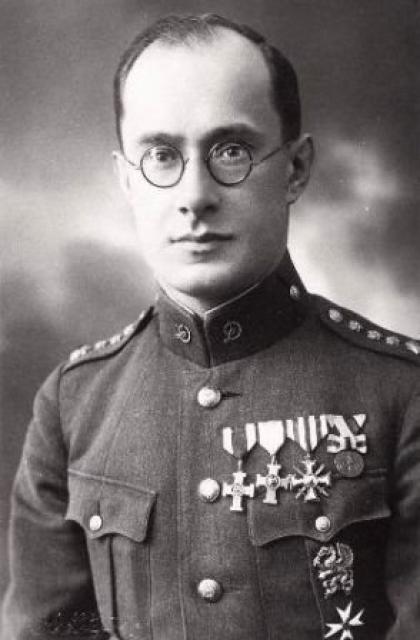
Georg Leets
 Estonia
- Georg Leets: Estonian Military Officer and Historian
- Rise in the Estonian Army
- Soviet Occupation and Arrest
- Imprisonment and Rehabilitation
- Return to Estonia
- Discovery of Hannibal's Portrait
- Later Years and Legacy
Georg Leets: Estonian Military Officer and Historian
Early Life and Military CareerGeorg Leets was born in Estonia and received his education at Pärnu Gymnasium. During World War I, he served as an artillery officer in the Russian army. After Estonia gained independence, Leets joined the Estonian army and fought in the Estonian War of Liberation.
Rise in the Estonian Army
Leets rapidly rose through the ranks of the Estonian military, earning the rank of Colonel by 1929. He held various command positions, including Chief of Artillery for the 1st Division. Concurrently, Leets pursued higher education and became a noted author of military history and artillery science.
Soviet Occupation and Arrest
In 1940, Estonia was occupied by the Soviet Union. Leets initially resisted the Soviet ultimatum, but President Konstantin Päts ultimately decided to accept Soviet demands. Leets was drafted into the Red Army and stationed in Northern Estonia. However, he was arrested in 1941 and sent to a labor camp in Norilsk.
Imprisonment and Rehabilitation
Leets was sentenced to 10 years' imprisonment and 5 years' exile. While in the camp, he worked as a bookkeeper. After his release in 1956, he was rehabilitated and reinstated to the rank of Colonel.
Return to Estonia
Leets returned to Estonia and resumed his career as a historian. He wrote a biography of Abram Hannibal, an African military engineer who served in Estonia and was the ancestor of Alexander Pushkin. Leets also donated his personal weapons collection to the Tallinn City Museum.
Discovery of Hannibal's Portrait
Despite his advanced age, Leets remained intellectually active. He discovered a letter signed by Hannibal in the archives and dedicated his later years to researching Hannibal's life. Leets believed he had identified the true portrait of Hannibal, which differed from the one previously accepted.
Later Years and Legacy
Leets passed away in his home on Perkovski Road in Tallinn. Despite the hardships he endured, he remained steadfast in his pursuit of knowledge and contributed significantly to Estonian military history. His legacy continues to inspire future generations of historians and military professionals in Estonia.


