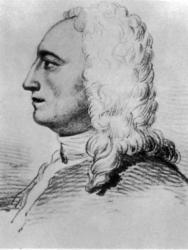
George Cantor
 Germany
Biography of Georg Cantor
Georg Cantor (1845-1918) was a mathematician who developed the theory of sets. He was the only mathematician and philosopher who believed that actual infinity not only exists but can be fully comprehended by humans. He dedicated his life to this task. Cantor firmly believed that he was chosen by God to bring about a great revolution in science, and this belief was supported by mystical visions.
Cantor's family moved from Russia to Germany when he was still a child. It was there that he began studying mathematics. After defending his dissertation on number theory in 1868, he obtained his doctorate from the University of Berlin. At the age of 27, Cantor published a paper containing a general solution to a very complex mathematical problem. The ideas in this paper later developed into his famous theory - the theory of sets. In 1878, he introduced and formulated a significant number of new concepts, defined sets, and provided the first definition of the continuum. He also developed principles for comparing sets. Cantor systematically presented the principles of his theory of infinity between 1879 and 1884.
Cantor's persistent desire to explore infinity as something actually given was a significant novelty at that time. He envisioned his theory as a completely new calculus of the infinite, a "transfinite" (or "beyond infinite") mathematics. According to his ideas, the creation of such a calculus was intended to revolutionize not only mathematics but also metaphysics and theology, which interested Cantor almost as much as his scientific research. He was the only mathematician and philosopher who believed that actual infinity not only exists but can be fully comprehended by humans. He believed that this comprehension would elevate mathematicians and, subsequently, theologians higher and closer to God. He dedicated his life to this task. Cantor firmly believed that he was chosen by God to bring about a great revolution in science, and this belief was supported by mystical visions.
However, Cantor's titanic attempt ended strangely. His theory revealed paradoxes that were difficult to overcome, casting doubt on the significance of his beloved idea - the "aleph ladder," a sequential series of transfinite numbers. (These numbers are widely known by their symbol, the Hebrew letter aleph.) The unexpectedness and uniqueness of his viewpoint, despite all the advantages of his approach, led to a sharp rejection of his work by most scholars. For decades, he engaged in a relentless battle with contemporary philosophers and mathematicians who denied the legitimacy of constructing mathematics on the foundation of actual infinity. Some saw this as a challenge since Cantor hypothesized the existence of sets or sequences of numbers with an infinitely large number of elements. The renowned mathematician Poincaré referred to the theory of transfinite numbers as a "disease" from which mathematics would someday recover. Cantor's teacher and one of Germany's most authoritative mathematicians, L. Kronecker, even attacked Cantor, calling him a "charlatan," "renegade," and "corrupter of the youth"!
It was only in 1890, when the applications of set theory to analysis and geometry were discovered, that Cantor's theory gained recognition as an independent branch of mathematics. It is important to note that Cantor contributed to the establishment of the German Mathematical Society, a professional association that promoted the development of mathematics in Germany. He believed that his scientific career suffered from biased attitudes towards his work and hoped that an independent organization would allow young mathematicians to judge new ideas for themselves and engage in their development. He also initiated the first International Congress of Mathematicians in Zurich. Cantor struggled heavily with the contradictions of his theory and the difficulties in its acceptance. From 1884, he suffered from severe depression and withdrew from scientific activities a few years later. Cantor passed away from heart failure in a psychiatric hospital in Halle.
Cantor proved the existence of a hierarchy of infinities, each one "larger" than the preceding. His theory of transfinite sets, enduring years of doubt and attacks, ultimately grew into a monumental revolutionary force in 20th-century mathematics and became its cornerstone.