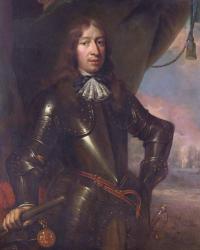
George Cockburn
 Great Britain
- Early Life and Naval Career
- American War and Capture of Washington
- Return to Europe and Post-War Achievements
- Later Years and Death
- Honorary Positions
Early Life and Naval Career
Born on April 22, 1772, in London, George Cockburn was the second son of Sir James Cockburn, 8th Baronet of Cockburn. In 1786, he joined the Royal Navy and quickly rose through the ranks. He served initially in home waters before embarking on voyages to the East Indies and the Mediterranean.
His first combat experience came in 1796 during the blockade of Livorno. The following year, he commanded the frigate HMS Minerve in the Battle of Cape St. Vincent. In 1809, he led the capture of Martinique and received the thanks of the House of Commons for his actions.
American War and Capture of Washington
In 1811, Cockburn was dispatched to protect Spanish colonies in America. He served as second-in-command to Admirals John Borlase Warren and Alexander Cochrane during the war with the United States, leading punitive raids against coastal settlements. Notably, he organized the recruitment of freed black slaves into the British colonial marine corps. In 1814, he led the capture and burning of Washington, D.C.
Return to Europe and Post-War Achievements
After the war, Cockburn was awarded the Order of the Bath in 1815 and tasked with escorting Napoleon Bonaparte to St. Helena, where he served briefly as governor. He held the post of First Naval Lord of the Admiralty multiple times (1828-1830, 1834-1835, 1841-1846). Elected to Parliament on several occasions, he sat as a Tory MP. In 1837, he was promoted to Admiral of the White.
Later Years and Death
In 1852, Cockburn inherited the baronetcy following the death of his elder brother. He passed away on August 19, 1853, in Leamington, Warwickshire.