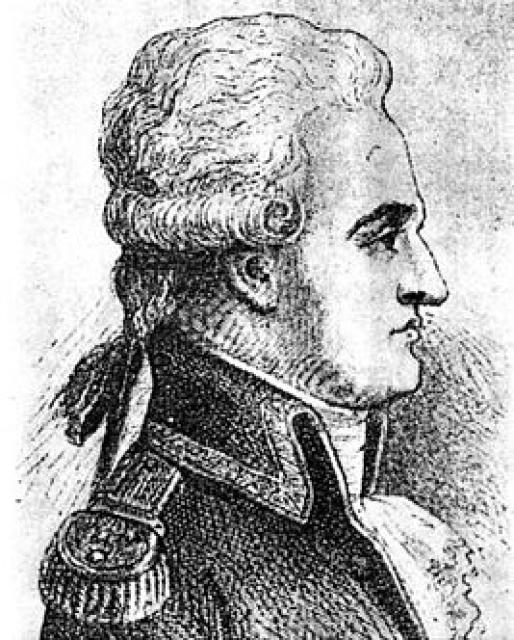
Pierre-Charles Villeneuve
 France
- Pierre-Charles-Jean-Baptiste-Silvestre de Villeneuve
- Revolutionary Years and Egyptian Expedition
- Commanding Admiral and Trafalgar
- Demoralization and Suicide
Pierre-Charles-Jean-Baptiste-Silvestre de Villeneuve
Early CareerPierre-Charles-Jean-Baptiste-Silvestre de Villeneuve was a French admiral who entered naval service in 1778. He participated in military operations in French colonies in South and North America. In 1786, he served in the Mediterranean Sea.
Revolutionary Years and Egyptian Expedition
After the French Revolution, Villeneuve became a ship captain but faced persecution due to his aristocratic background. However, in 1795, he rejoined the naval guard in Toulon. He participated in Napoleon's Egyptian campaign, where he displayed passivity at the Battle of the Nile despite taking command of the fleet after Admiral Brueys' death. He led the remaining fleet to Malta, where he surrendered to the British.
Commanding Admiral and Trafalgar
In 1804, Villeneuve became a rear admiral. In 1805, he commanded the fleet that, alongside Admiral Gravina's Spanish Cádiz squadron, carried out a diversionary maneuver to facilitate an invasion of the British Isles. During this plan's execution, he conducted an expedition to the Caribbean.
On his return to Europe, he faced a British squadron off Cape Finisterre, where he exhibited incompetence and passivity, losing the trust of his allies for refusing to liberate captured Spanish ships. Subsequently, against Napoleon's orders to proceed to the English Channel, he turned south and anchored in Cádiz. He remained there for two months without apparent reason, allowing the British to reinforce and block his fleet, ultimately sabotaging the plan.
Demoralization and Suicide
Recognizing his squadron's dire condition, Villeneuve hesitated to engage with the blockading British forces under Nelson's command, despite Napoleon's orders to sail into the Mediterranean. However, upon learning of his impending replacement by Admiral Rosily, he ordered his fleet to sail into certain doom.
At the Battle of Trafalgar, he engaged Nelson's squadron, resulting in a crushing defeat and Villeneuve's capture. He was released on parole but, deeply demoralized and fearing Napoleon's wrath, committed suicide. Historians question the exact manner of his death, as some believe he was stabbed six times.