George II
 Greece
Biography of King George II of Greece
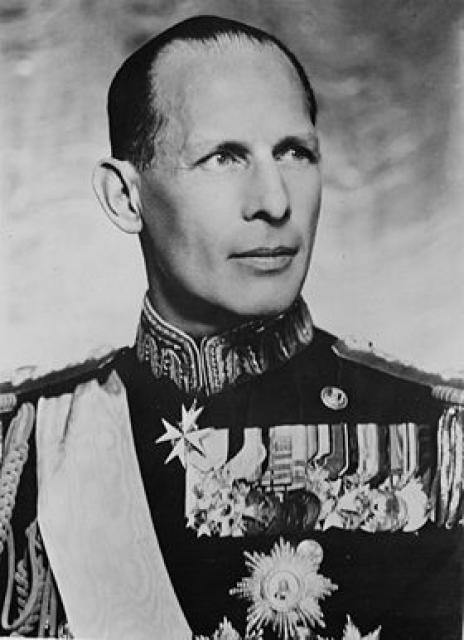
King George II of Greece reigned from 1922 to 1924 and from 1935 to 1947. He was born on the royal estate in Tatoi, near Athens, as the eldest son of Greek King Constantine I and his wife, Princess Sophia of Prussia. George chose a military career and joined the Prussian Guard at the age of 18. He later participated in the Balkan War as a member of an infantry unit. In 1913, George's grandfather was assassinated, and he became Crown Prince and Duke of Sparta. During World War I, his father was overthrown by rebels, and George, who had reached the rank of major, went into exile with him. George's brother, Alexander, became the new King of Greece, but he was largely controlled by the rebels. Alexander died in 1920 from an infection caused by a monkey bite. Shortly after his death, Prime Minister Eleftherios Venizelos, Alexander's patron, lost his position, and Constantine was restored to the throne. Meanwhile, Crown Prince George continued his military career and fought in Turkey, first as a colonel and later as a major general.
On February 27, 1921, George married his cousin, Princess Elisabeth of Romania. The Greeks were defeated by the Turks in the Battle of Dumlupınar, and the military promptly removed Constantine and replaced him with George.
George ascended the throne on September 27, 1922. In October 1923, royalists attempted to seize power but failed. The revolutionary committee insisted that George abdicate, but he refused and instead left the country, going to Romania. On March 25, 1924, Greece became a republic, and George was officially dethroned, stripped of his citizenship and all his property. While his wife mostly lived in Bucharest, George traveled extensively, often wandering around Britain or visiting his mother in Florence. In 1932, George permanently left Romania and moved to Britain. He and Elisabeth never had children, and they officially divorced on July 6, 1935.
During the period from 1924 to 1935, Greece experienced 23 changes of government, a dictatorial regime, and 13 coups. In October 1935, the government was once again overthrown, this time by General Georgios Kondylis. On November 3, 1935, 98% of the voters supported the restoration of the monarchy in a non-secret ballot. George returned to Greece on November 25 and promptly clashed with Kondylis. He appointed Konstantinos Demertzis as the new Prime Minister. In January, new elections were held, and the parliament was filled with communists opposed to the monarchy. Several prominent politicians unexpectedly died, including Demertzis and Kondylis. Ioannis Metaxas, a new dictator, came to power. Despite the regime's pro-fascist orientation and close ties with Nazi Germany at the start of World War II, George clearly sided with Britain.
On October 28, 1940, Metaxas rejected the Italian ultimatum, initiating the Greco-Italian War. The Greeks defended themselves successfully, but on April 6, 1941, the Germans intervened, and on April 23, the king and the government were forced to flee from the mainland to Crete. However, George eventually had to flee from Crete as well. He initially sought refuge in Egypt and then in Great Britain. During the war, George formally remained the head of state, but the Greek Resistance, which he did not sympathize with, grew stronger and stronger. The king distanced himself from the Metaxas regime, which partially played in his favor. On March 31, 1946, the monarchists won a majority in parliament, and a referendum was held on September 1. 69% voted for the return of the king. George returned to Greece on September 26. His palace had been looted, the forests in Tatoi were cut down, and the country was in a dire situation. George did not have much time to do a lot to improve the situation, as he died from atherosclerosis on April 1, 1947. The royal throne passed to George's younger brother, Paul.