George Patton
 USA
USA- Biography of General George Patton
- Early Life and Military Career
- Interwar Period and World War II
- Post-War and Death
Biography of General George Patton
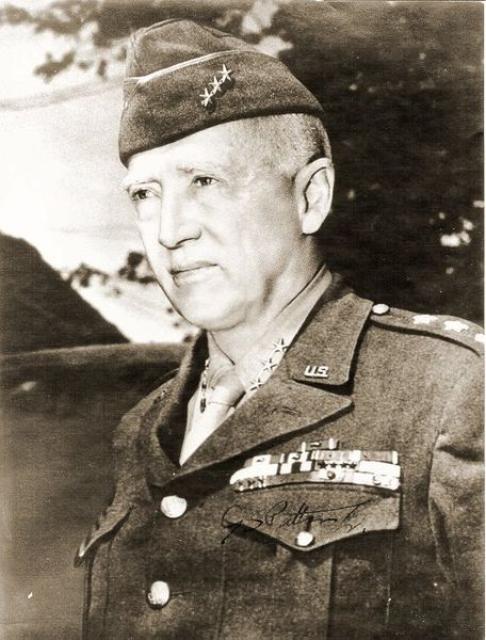
General George Patton, the hero of World War II, was one of the most popular commanders in American society. Known for his tough demeanor, he cared deeply for his soldiers. However, there were incidents that showcased his harsh temperament. This includes the time when Patton almost sent a soldier with combat fatigue to his death and when he referred to a nation as "sons of bitches, barbarians, and chronic alcoholics."
Early Life and Military Career
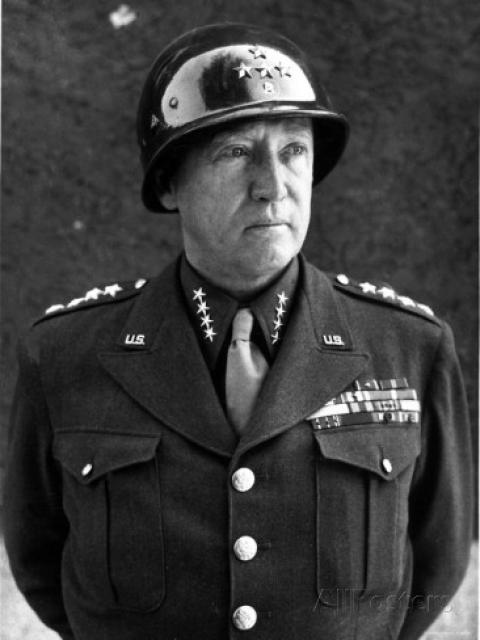
George Smith Patton Jr. was born on November 11, 1885, into a privileged family with a rich military history. He attended the Virginia Military Institute and later the United States Military Academy at West Point. In 1912, George participated in modern pentathlon at the Olympics. He also played a significant role in the development of the American cavalry saber, known as the "Patton Saber" or M1913 model.
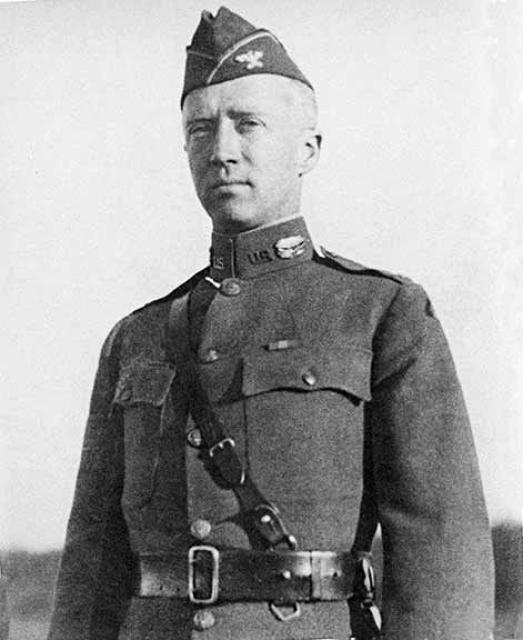
Patton's first combat experience came during the "punitive expedition," a military operation by the United States Army to eliminate the armed forces of Mexican revolutionary Francisco "Pancho" Villa in 1916. It was the first American military operation involving motor vehicles. Later, Patton joined the newly formed Tank Corps of the American Expeditionary Forces. He fought in World War I and commanded the American tank school in France before being wounded towards the end of the war. Patton proudly showed his scar and referred to himself as the "half-assed general" but was also known by the nickname "Old Blood and Guts."

Interwar Period and World War II
During the interwar period, Patton played a central role in developing armored warfare doctrine in the U.S. Army and held various positions. Rising through the ranks, Patton commanded the 2nd Armored Division when the U.S. entered World War II. He led American forces in the Mediterranean Theater of Operations, including the invasion of Casablanca during Operation Torch in 1942, which marked the defeat of the last pockets of resistance.

Patton proved to be an effective commander, quickly restoring morale in the demoralized Second Corps. He commanded the Seventh Army during the invasion of Sicily, where he became the first Allied commander to reach Messina. However, it was on the island of Sicily that Patton became involved in a controversy. He struck a soldier with combat fatigue, Private Paul Bennett, after the soldier honestly admitted to having "nerves" from the war. The general berated Bennett, calling him a cowardly bastard. Patton then struck Bennett in the face and knocked off his helmet. Explaining himself, Patton claimed that his blood boiled when he saw soldiers "mollycoddling with damn doctors."
After the incident, Patton was temporarily relieved of his command and participated in Operation Fortitude, a deception campaign that was part of the broader strategic deception plan known as "Bodyguard." Patton returned to command the Third Army after the invasion of Normandy in 1944, where he employed the German blitzkrieg tactics against them. He played a key role in repelling the German counteroffensive in the Ardennes.
Post-War and Death
After the war, George became the military governor of Bavaria. However, he was relieved of his duty due to his statement about denazification. He spent just over two months commanding the Fifteenth Army. On December 9, 1945, a day before his scheduled return to the U.S., Patton was involved in a car accident while hunting pheasants in a Cadillac Model 75. Robert L. Thompson, driving a 2.5-ton GMC truck, veered into the oncoming lane. The Cadillac collided with the truck, throwing Patton forward. He hit his head on the glass partition and suffered a severe injury. Patton was left paralyzed. On December 21, 1945, he died from embolism in Heidelberg, Germany, with his wife by his side. In an obituary in The New York Times, Patton was referred to as "one of the most brilliant soldiers in American history." Nazi generals were known to fear Patton more than any other American commander.
It is also known that Patton held unfavorable views not only towards Jews but also Russians. He once said that if ordered, he would throw Russians behind the Vistula River. He believed that Russians did not value life and openly called them "sons of bitches, barbarians, and chronic alcoholics." In 1970, a film titled "Patton," directed by Franklin James Schaffner, depicted the actions of General Patton during World War II.