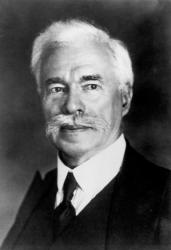
George Soros
 USA
USABiography of George Soros
George Soros is a well-known financial magnate, philanthropist, and social thinker. He was born on August 12, 1930, in Budapest, Hungary, to a middle-class Jewish family. His father was a lawyer and publisher. During World War I, his father volunteered for the front and was captured by the Russians, but he managed to escape and return to Budapest. In the times of repression, Soros and his family escaped persecution by the Nazis thanks to forged documents created by his father. In 1947, they emigrated to the United Kingdom.
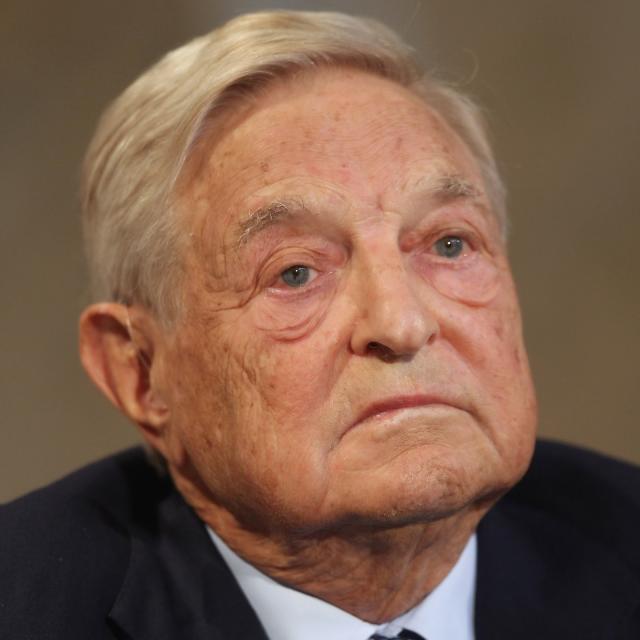
In the UK, Soros attended the London School of Economics and studied under the renowned Austrian philosopher Karl Popper, who became his mentor. It was Popper's idea of an open society that became Soros' life goal. He established numerous charitable organizations around the world to promote the concept of an open society.

Initially, Soros found work at a haberdashery factory in England. He started as a manager's assistant but eventually became a traveling salesman, selling various products to traders at Welsh seaside resorts. Alongside his sales job, Soros attempted to find work in all the trading banks in London but faced rejection due to his nationality and lack of connections. Finally, in 1953, he secured a position at Singer & Friedlander, a company owned by a fellow Hungarian, in the arbitrage department located near the stock exchange.

After three years, Soros found a way to move to the United States in 1956. He arrived in the US through an invitation from his father's London friend, Meyer, who owned a small brokerage firm on Wall Street. Soros began his career in the US with international arbitrage, buying securities in one country and selling them in another. After the Suez Crisis, Soros developed a new trading method called internal arbitrage, which involved selling combined securities before they could be officially separated. This venture was profitable until the Kennedy administration introduced additional taxes on foreign investments. Overnight, Soros' business was ruined, and he turned back to his philosophical interests.
From 1963 to 1966, Soros attempted to rewrite his dissertation but was unsatisfied with his work, feeling that he was merely regurgitating his great teacher's ideas. In 1966, he returned to the business world. With a capital of $100,000, Soros created an investment fund called Double Eagle, which later evolved into the famous Quantum Group. The fund conducted speculative operations with securities, earning Soros millions of dollars in profit. By the mid-1990s, Quantum Group's capital reached $10 billion. Today, every dollar invested in the fund has turned into $5,500.
On September 15, 1992, Soros made a significant impact by profiting from the sharp decline of the British pound. This event earned him the nickname "The Man Who Broke the Bank of England." Soros' success in finance laid the foundation for his philanthropic career. He established the Open Society Fund, which led to the creation of charitable foundations in more than 25 countries worldwide. Soros also financed various projects, including the establishment of Internet centers in Russian universities.
Despite his financial successes, Soros faced a series of failures starting in 1997. Most of his investments resulted in significant losses, prompting him to shift his focus to funding scientific and artistic programs. One of his notable failures was the acquisition of a controlling stake in the Russian company "Svyazinvest," which he later referred to as the "biggest mistake of his life."
Soros is also known for his written works. He authored several books, including "The Alchemy of Finance" (1987), "Opening the Soviet System" (1990), and "Underwriting Democracy" (1991). His net worth was estimated at $11 billion in November 2009, $19 billion in September 2012, and $24.9 billion in 2016. Throughout his life, Soros has donated over $5 billion to charitable causes, with one billion dedicated to Russia alone.
In 2015, the Open Society Fund was added to Russia's list of "undesirable" NGOs, rendering it unable to operate in the country. In 2017, the ruling party in Hungary, FIDESZ, announced plans to amend a law that would require NGO leaders to declare their assets.