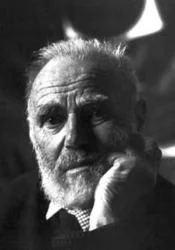
Georges Cain
- Family and Artistic Training
- Painter of History and Parisian Life
- At the Musée Carnavalet
- Later Years and Legacy
Georges Cain moved between two worlds that shared a fascination with the past: the artist’s studio and the museum gallery. A painter trained in history and military scenes, he later became the long-serving curator of Paris’s Musée Carnavalet, where he helped shape a collection devoted to the city’s history. He also wrote vivid books about Paris, its streets, theaters and vanished corners, preserving a version of the capital in words as well as in pictures.
Family and Artistic Training
Cain was born in Paris on April 16, 1856, into a family closely tied to the arts. His father, Auguste Cain, was a well-known animal sculptor, and his maternal grandfather, Pierre-Jules Mêne, was also a sculptor. His younger brother, Henri, became a writer and librettist. Some museum catalogues give Georges’s birth year as 1853, but Parisian archival and museum records more commonly identify him as born in 1856.
He trained as a painter with Alexandre Cabanel and Jean-Georges Vibert, then studied under Édouard Detaille, whose influence proved especially strong. Detaille was known for carefully observed military subjects, and Cain’s early work likewise leaned toward historical and martial scenes. He began exhibiting at the Paris Salon in 1878 with a painting titled Fumeur de l’époque Louis XV. His work appeared there regularly for more than two decades, and he received an honorable mention in 1881.
Painter of History and Parisian Life
Cain worked across historical scenes, genre painting and illustration. He had a particular eye for the city around him: its streets, old buildings, theaters and everyday rituals. This interest gradually made Paris itself his most distinctive subject. His paintings and drawings joined the visual record of a capital changing rapidly through demolition, redevelopment and modern urban life.
He later turned the same attention to writing. À travers Paris, published in 1909, offered readers a richly illustrated walk through the city, combining 148 illustrations with sixteen old and modern plans. Cain wrote with a painter’s eye and a curator’s sense of historical detail, moving between neighborhoods and eras to evoke a Paris that was often disappearing even as he described it. His other books, including Coins de Paris and Environs de Paris, continued that exploration of the capital and its surroundings.
At the Musée Carnavalet
In 1897, Cain was appointed curator of the Musée Carnavalet, the museum of Paris history. He remained in the post until his death. His arrival coincided with a moment of expansion: the historical library moved to a neighboring building, freeing rooms for new displays. Cain used the opportunity to reorganize and enrich the museum, including by installing old woodwork rescued from demolished Parisian buildings. The rooms became more than display spaces; they offered visitors an encounter with the decorative history of the city.
Cain also helped extend the museum’s collections beyond buildings and paintings. At the 1900 Paris Exposition, he worked on a retrospective museum devoted to costume and its accessories, collaborating with his brother Henri and other writers and specialists. In 1907, a Society for the History of Costume was founded to gather and study historic dress. Cain later helped bring the collection of the Pasteur society into Carnavalet in 1913, adding portraits and works associated with performers and public figures of Parisian theater.
His role at Carnavalet blended scholarship with a public-facing style. He was a familiar figure in the city’s cultural circles, but the museum’s lasting achievement was concrete: its rooms, objects and collected images gave Parisians a way to see the city’s past as something lived in, built, worn and constantly transformed.
Later Years and Legacy
Cain died in Paris on March 4, 1919. He left a dual legacy as an artist and as one of the figures who reshaped the Musée Carnavalet at the turn of the twentieth century. His paintings preserved scenes from earlier periods, while his books invited readers to wander through real streets and imagine their layered histories.
Today his name is closely connected with the museum he guided for more than two decades. The institution’s later tributes have described him as one of its refounders, recognizing the scale of his influence on its collections and presentation. His career ultimately made Paris both his subject and his workplace: a city he painted, documented and helped preserve for those who came after him.