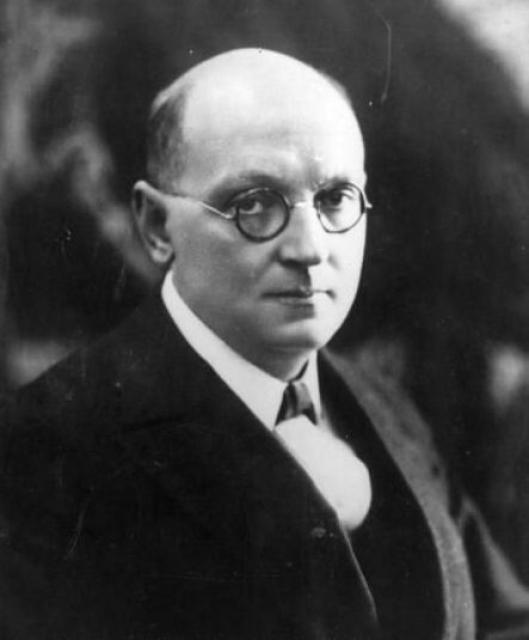
Georges Duhamel
 France
- Early Life and Education
- Literary Beginnings
- World War I and its Impact
- Literary Maturity
- Social and Political Views
- Literary Legacy
- Later Years and Death
Early Life and Education
Georges Duhamel, born in Paris on June 30, 1884, belonged to a modest family. He pursued a medical degree, graduating in 1906.
Literary Beginnings
In 1906, Duhamel co-founded the artistic collective "L'Abbaye" alongside Jules Romains and Charles Vildrac. He emerged as a leading critic of the "Unanimist" literary movement, advocating for authenticity, simplicity, and opposition to literary conventions.
World War I and its Impact
Duhamel's wartime experiences as a military physician profoundly shaped his writing. His "testimonies" about the horrors of war include "Life of the Martyrs" (1917), "Civilization" (1918), and "Seven Last Scourges" (1928). These works exposed the suffering of wounded soldiers and his disgust with organized violence.
Literary Maturity
Duhamel's prose garnered critical acclaim, particularly his epic novel "Abandoned" (1921) and the "Salavin" novels (1920-1932). His work simultaneously analyzed the individual psyche and explored social issues, revealing the complexities and contradictions of modern life.
Social and Political Views
Duhamel defended individualism and condemned both revolutionary change and unchecked capitalism. He promoted the importance of introspection and the power of dreams. His opposition to authoritarianism and nationalism is evident in works such as "Community of Athletes" (1920) and his condemnation of colonialism in "Scenes of the Future" (1930).
Literary Legacy
Duhamel was elected to the prestigious Académie française in 1935. As a writer and intellectual, he was a prominent figure in French society, actively advocating for French culture and the preservation of European civilization in the face of threats like standardization and fascism.
Later Years and Death
In his later years, Duhamel continued to write, reflecting on his life and experiences in his memoirs, "My Life in Daylight" (1945-1953). He passed away on April 13, 1966, leaving behind a significant literary legacy that continues to resonate with readers today.


