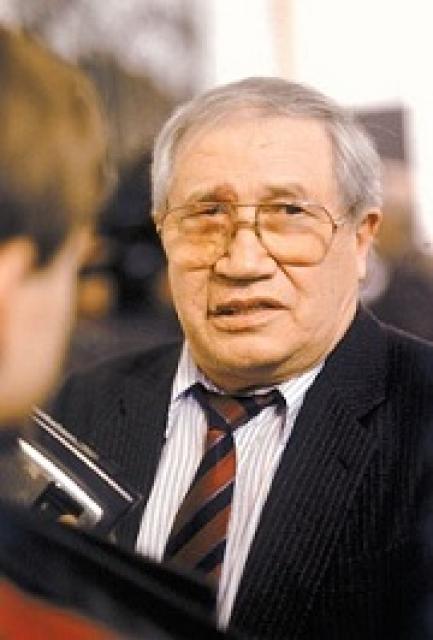
Georgiy Vladimov
 Russia
- Georgy Vladimov: A Literary Pioneer
- Early Life and Education
- Literary Beginnings and Critical Acclaim
- Confessional Prose and Transformation
- Dissent and Emigration
- Return to Russia and Legacy
Georgy Vladimov: A Literary Pioneer
Georgy Vladimov was a renowned Russian writer and literary critic, known for his evocative prose and incisive social commentary.
Early Life and Education
Born into a family of educators, Vladimov spent his formative years at the Leningrad Suvorov Military School. He later pursued a law degree at Leningrad University, graduating in 1953.
Literary Beginnings and Critical Acclaim
Vladimov's literary career began as a critic for the journal "Novy Mir" in 1954. His articles, such as "On the Dispute with Vedernikov" and "The Village of Ognischanka and the Wider World," established him as a discerning voice in Soviet literature.
In 1961, Vladimov's debut novel, "Big Ore," sparked widespread debate. Despite its superficial resemblance to conventional "production" novels, the work became a defining text for the "Sixtiers," a generation of intellectuals who sought to challenge Soviet orthodoxy.
Confessional Prose and Transformation
Vladimov's 1969 novel, "Three Minutes of Silence," broke new ground in using confessional prose to explore the everyday lives of a fishing trawler crew. The novel's titular leitmotif emphasizes the right of every individual to send out an "SOS" signal and the importance of ensuring that such signals are heard.
In his later works, such as the novella "Faithful Ruslan" (1975), Vladimov delved into the theme of transformation. He explored how the noblest human qualities, often embodied in the tradition of Chekhov and Tolstoy, could be twisted into tragic outsiderhood and alienation in a society plagued by falsehood and manipulation.
Dissent and Emigration
In 1977, Vladimov resigned from the Union of Soviet Writers. Two years later, he founded the banned organization "Amnesty International" in Moscow. His opposition to the Soviet regime led to his 1982 publication of the story "Pay No Attention, Maestro" in the West.
In 1983, Vladimov emigrated to Germany. He became editor-in-chief of the emigrant journal "Grani." However, he resigned in 1986, expressing concerns about the organization's political motivations.
Return to Russia and Legacy
After the fall of the Soviet Union, Vladimov returned to Russia in the late 1980s. He published a series of essays and articles, including his novel "The General and His Army" (1994). The latter work, which explores the life of General Vlasov during the Second World War, brought Vladimov widespread recognition.
Vladimov passed away in Germany on October 19, 2003. He was laid to rest in Peredelkino, a literary enclave near Moscow. His enduring legacy lives on through his thought-provoking prose and his unwavering commitment to truth and human dignity.




