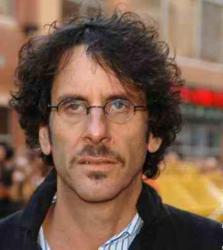
Gerard Damiano
 USA
Gerard Damiano helped move adult cinema from the margins into mainstream conversation. A former hairdresser with an eye for low-budget filmmaking, he became internationally known for “Deep Throat,” the 1972 feature whose success, legal battles, and continuing debate made it one of the most talked-about films of its era. He followed it with more ambitious works that blended adult material with narrative and dramatic elements.
From the Bronx to filmmaking
Born Gerardo Rocco Damiano in the Bronx, New York, on August 4, 1928, he grew up in an Italian American family. His father died when he was six, and his mother raised him. At 17, Damiano joined the Navy. After four years of service, he used the G.I. Bill to continue his education, studying X-ray technology before opening a hair salon in the 1950s.
Damiano later said that listening to customers talk about their intimate lives made him think there could be an audience for adult films with wider appeal. His first steps into filmmaking came through a connection to a low-budget horror production. He spent time around the set, drove crew members, and eventually began working with a camera. By the late 1960s and early 1970s, he was making short adult films and pseudo-educational features such as “Marriage Manual,” “Changes,” and “Sex USA.”
The breakthrough of “Deep Throat”
Damiano wrote and directed “Deep Throat” under the name Jerry Gerard. Shot in six days in Miami and New York in January 1972 on a reported budget of about $25,000, the film starred Linda Lovelace and Harry Reems. It opened in a Times Square theater that June and recouped its budget within a week. Its humor, plot, and parody helped distinguish it from many earlier adult films, and it became a box-office sensation discussed in newspapers, talk shows, and popular culture.
The film also drew obscenity prosecutions and repeated efforts to shut down screenings. In a federal case, Damiano’s production company and distributors were among those convicted of conspiracy to transport the film in violation of obscenity laws; the convictions were upheld on appeal. Its title entered another corner of American history when Washington Post editors used “Deep Throat” as the nickname for the confidential source who helped reporters Bob Woodward and Carl Bernstein investigate Watergate.
The success came with a darker legacy. Lovelace later said that her then-husband, Chuck Traynor, had forced her to take part in the film. The allegation reshaped later discussions of “Deep Throat,” complicating accounts that had treated it simply as a breakthrough in sexual expression. Reporting at the time distinguished her claim about Traynor from Damiano himself, but her account became central to debates about consent, exploitation, and the adult-film industry.
A body of work beyond one hit
Damiano’s next landmark, “The Devil in Miss Jones” (1973), took a more openly dramatic approach and became another major success. He continued with “Memories Within Miss Aggie” (1974) and “The Story of Joanna” (1975), films that drew attention for their narrative ambitions. Across his career he directed dozens of adult features, but none matched the cultural impact of his early-1970s work.
Damiano was married to Paula Morton, and they had a son and a daughter. He later divided his time between New York and Fort Myers, Florida, where he retired. He died at a hospital in Fort Myers on October 25, 2008, aged 80, after suffering a stroke the previous month. His legacy remains inseparable from “Deep Throat”: a film that changed the visibility of adult entertainment while raising questions about censorship, commercial power, and the treatment of the woman at its center.