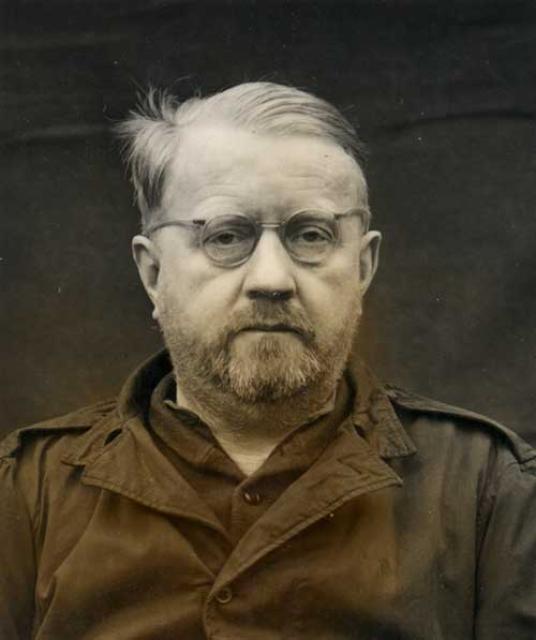
Gerhard Rose
 Germany
Biography of Gerhard Rose
Gerhard Rose was a Nazi and war criminal, as well as a doctor specializing in tropical medicine. During the Third Reich, he served as the head of the Department of Tropical Medicine at the Robert Koch Institute, a German microbiology institute. He also held the position of advisor to the head of the sanitary service of the Luftwaffe. He was one of the twenty doctors who stood trial at the Nuremberg Doctors' Trial.
Gerhard Rose was born on November 30, 1896, in Danzig, northern Poland, into a family of postal workers. After completing gymnasium, Rose enrolled in the Kaiser Wilhelm Military Medical Academy and studied medicine at the universities of Berlin and Breslau. He successfully passed his exams and became a certified prospective doctor on May 16, 1922. Even before obtaining his diploma, in 1921, Rose joined the volunteer units of the paramilitary organization Roßbach Brigade. According to Rose, these units served as a "defense against Polish expansion in Upper Silesia."
From 1922 to 1926, Rose worked as an assistant at the Robert Koch Institute and also taught at the anatomy department of the university in Freiburg, Baden-Württemberg, and at the hygiene institute in Basel, Switzerland. After moving to Heidelberg, in northwest Baden-Württemberg, Rose opened a private practice while also working at one of the surgical departments of the city's university.
In 1929, Gerhard Rose left Germany and became a medical advisor to the Kuomintang government, a conservative political party in Taiwan. In December of the same year, he became the director of the health organization in Jiangxi, eastern China, while also serving as the medical advisor to the Minister of Interior in the province.
In early October 1930, Rose joined the Nazi Party (NSDAP). Due to the escalating Sino-Japanese war, he returned to Germany in September 1936, where he worked as the head of the Department of Tropical Medicine at the Robert Koch Institute. From September 1938, Rose taught tropical hygiene and medicine at the University of Berlin. In 1939, he joined the sanitary department of the Luftwaffe and became a member of the Spanish Legion "Condor." In August 1942, he got married, and they had one child.
In early February 1943, Gerhard Rose was appointed as the vice-president of the Robert Koch Institute. Inspired by the hypothesis of Australian psychiatrist Julius Wagner-Jauregg, who suggested that infecting patients with malaria could have a therapeutic effect on those with progressive paralysis and severe mental disorders, including schizophrenia, Rose infected 110 individuals with malaria parasites between 1941 and 1942. For some of the subjects, this experiment proved fatal.
The timing of Rose's experiments coincided with the "T-4" program – the so-called Action T4, which aimed to euthanize mentally ill patients, mentally disabled individuals, and children with developmental deformities. Taking advantage of the eugenic program of the German National Socialists for sterilization, Rose requested individuals destined for euthanasia from the program's organizer, Viktor Brack.
During the Nuremberg Doctors' Trial, Gerhard Rose was accused of crimes against humanity and war crimes. He was sentenced to life imprisonment, which was later reduced to 15 years. On June 3, 1955, Rose was released from prison. After his release, he worked for a long time at a bottle factory in Oberkirchen. In 1977, he even received the Paul Ehrlich and Ludwig Darmstaedter Prize for his humane scientific achievements.
Gerhard Rose passed away on January 13, 1992, at the age of 95 in Lower Saxony.


